


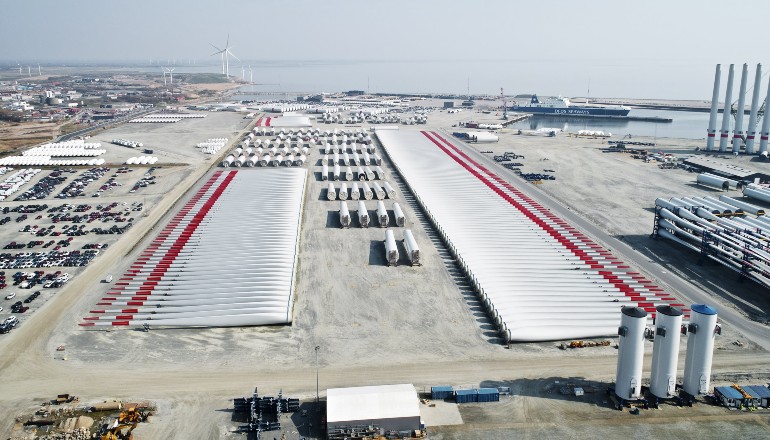
The Esbjerg wind port has deployed digital twin technology to calculate efficient methods for deploying offshore wind equipment.
The company said that the tool will help triple the port’s shipping capacity for offshore wind installations from 1.5GW to 4.5GW within the next two years.
By using the computer program’s insights, the port will make physical changes to the facility, such as rebuilding various access roads.
The US company Moffatt & Nichol developed the digital twin for Port Esbjerg.
“It’s a gamechanger,” said Port Esbjerg CEO Dennis Jul Pedersen.
The digital twin offers a 1:1 simulation of the port, utilising huge amounts of data to analyse all port processes related to the shipping of offshore wind installations.
“Working with the digital twin is a gamechanger. We can make much better decisions using that tool. It means that we can triple our capacity at Port Esbjerg without expanding by a single square metre,” Port Esbjerg CEO Dennis Jul Pedersen explained.
“We’re now the first port in the world to have a digital twin for offshore wind. However, it could play a huge role in the deployment of wind installations across the whole of Europe in the coming years.
“There’s a lack of space at most wind ports in Europe, so we need to pull the ports out of our spreadsheets and create more digital twins instead.”