


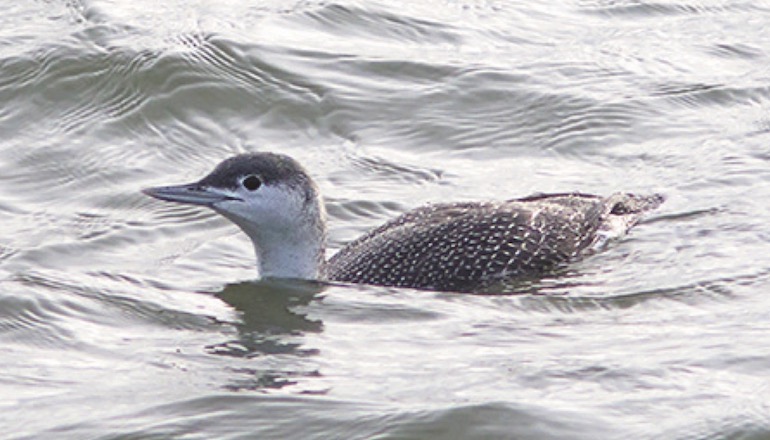
The expansion of offshore wind in the German Bight region of the North Sea has had no negative impact on the population of diver birds, a study commissioned by the Federal Association of Offshore Wind Farm Operators (BWO) has found.
Carried out by BioConsult SH, the study examined diver abundance and distribution based on aerial survey data.
It found there is no decrease in the spring population of divers in the study area of the German North Sea and that abundances within the main concentration area as well as the SPA “Eastern German Bight” have remained stable.
The research was a follow-up on a previous study which aimed to analyse potential changes in diver distribution over the last 21 years, before and after the expansion of OWF in the German North Sea.
Both studies had the same results.
“The sea divers studies (“DIVER I” & “DIVER II”) prove that an environmentally compatible expansion of offshore wind energy is possible,” said Stefan Thimm, managing director of BWO.
“Offshore wind farm operators take conservation concerns related to offshore development very seriously.
“Ultimately, climate protection – and that includes the expansion of renewable energies – is nothing more than long-term species protection.
“So we don’t work against each other here, we work together,” he said.
The research was funded by a number of offshore wind developers and groups including EnBW, Orsted, OWP, Vattenfall Europe Windkraft, WindMW, Iberdrola, RWE and BWO.