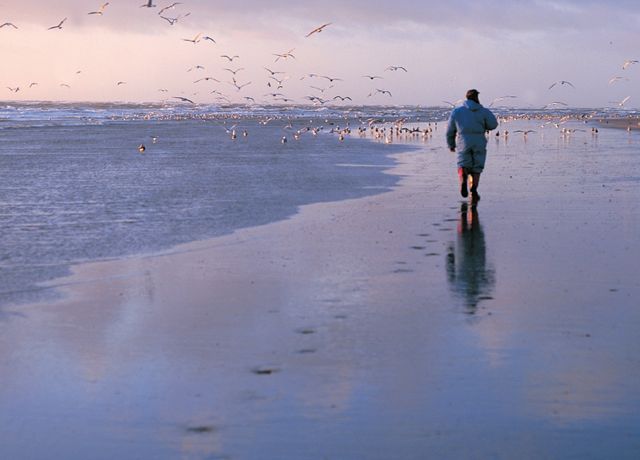
Dong Energy is partnering with the British Trust for Ornithology (BTO) to study the behaviour around offshore wind farms of the amber-listed lesser black-backed gull.
The study is using GPS tags to track the movements of gulls at Cumbria Wildlife Trust’s South Walney Nature Reserve and on rooftops in Barrow-in-Furness over a two-year period.
The partners said the tags, which sit between a bird’s wings like a backpack, will allow them to understand many different aspects of these birds’ lives around wind farms, including whether gulls are at risk of death through collision with turbine blades.
The study is being jointly funded by the 660MW Walney Extension and 258MW Burbo Bank 2 projects, two of the offshore wind farms that Dong is currently constructing off the UK’s northwest coast.
The tagging took place this year during the gulls’ summer breeding season and has already shown some differences in the use of offshore areas by birds from South Walney and Barrow, Dong and BTO said.
Dong lead environment and consents specialist Allen Risby said: “We are keen to learn more about how these gulls behave around offshore wind farms as they fly above, below or between the individual wind turbines.”
Image: Dong Energy
Dong feathers offshore study nest
Two-year project set up to track amber-listed lesser black-backed gull
 By EBS