


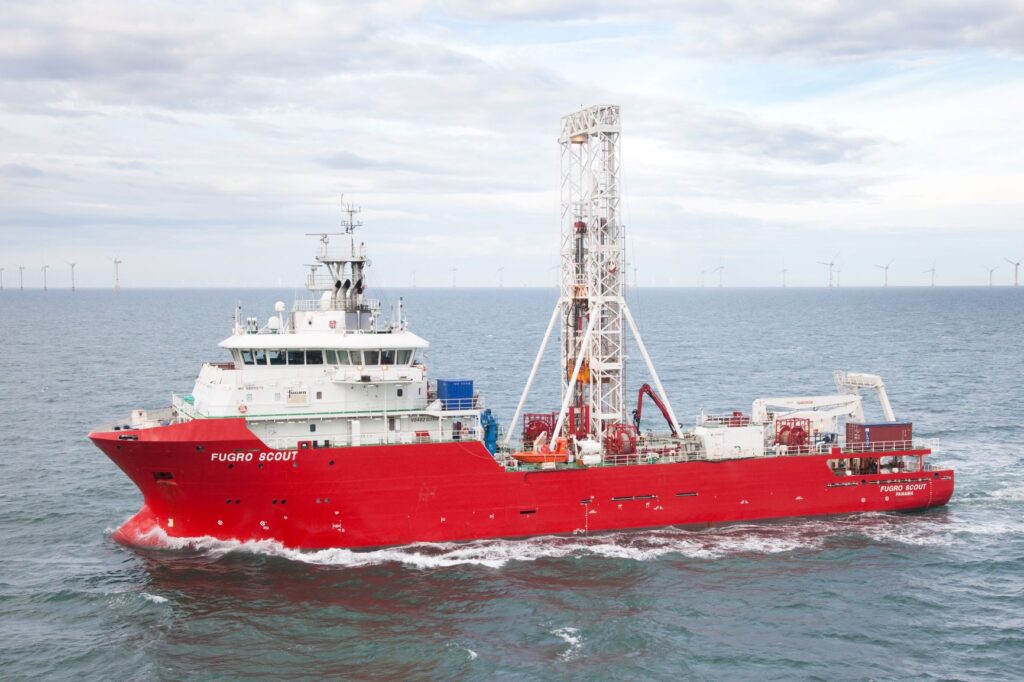
Fugro is to carry out survey work for Danish transmission system operator Energinet at the site of the proposed up to 1200MW Hesselo offshore wind farm.
Energinet said the work is partly to reduce the risk for the companies that will bid to build the project and partly to minimise the impact on the environment.
Fugro will deploy two vessels to perform the work across 248 square km of sea 20-30 km north of Zealand.
The work will take four to five months covering geophysical probes to uncover the surface and geology of the seabed, the water depths, possible vulnerable reefs and old shipwrecks in the offshore wind area.
At the same time, Energinet is also starting to investigate the two possible routes for the high-voltage export cables.
It said the work will help determine whether the cables go ashore at Gilbjerg Hoved or Kyndby, which will be decided by the Danish Energy Agency (DEA) later this year.
Energinet chief consultant in the geoscience team Jens Colberg-Larsen said: “Normally we carry out seabed surveys during the summer, where there is little risk that the ships will have to go into port due to bad weather.
“But for Hesselo we have to do the surveys in the winter. This is due to the fact that the offshore wind farm has been advanced and must be ready to supply electricity in 2027 compared to the original 2028.”
Energinet said the survey work has been planned so that the area’s fishing activities are taken into account as far as possible.
The company will also have environmental studies carried out, assessing the number of marine mammals, fish and seabed animals over the 2020/2021 winter period.
Measurements will be made of waves, wind conditions, ocean currents and temperatures over the next year and a half, it added.
In the summer of 2021, Energinet will drill holes up to 70 meters deep in the seabed to investigate the geology of the seabed.
This will help determine the type of foundations needed for the project.
Energinet said it has been instructed by DEA to investigate the sea area for the wind farm and the export cables route.
The results of the studies will be published so that the companies that will bid to establish the offshore wind farm are aware of the conditions and the possible risks.
The winner of the tender will pay for the completion of the surveys.
Energinet will also carry out environmental studies and obtain environmental and planning permits for the facilities on land.