


Equinor, Petoro, TotalEnergies, Shell and ConocoPhillips have initiated a study looking into possible options for building a 1GW floating offshore wind farm in the Troll oil field area some 65km west of Bergen, Norway.
The Trollvind project would deliver 4.3 terrawatt-hours a year of electricity starting in 2027, the companies said.
Trollvind could provide much of the electricity needed to run the Troll and Oseberg oil fields through an onshore connection point, they said.
The Bergen area already serves several of the installations with power and needs more input to its electricity grid, the partners added.
The plan is that the partnership will buy as much energy as the wind farm can produce at a price that can make the project possible.
The partners are evaluating commercial arrangements where the Trollvind development sells power to the Troll and Oseberg installations and the Kollsnes plant.
Trollvind will not require other forms of financial support, they said
Estimates indicate that Trollvind can deliver power for less than Nkr 1 (€0.095) a kilowatt-hour.
An investment decision is expected during 2023.
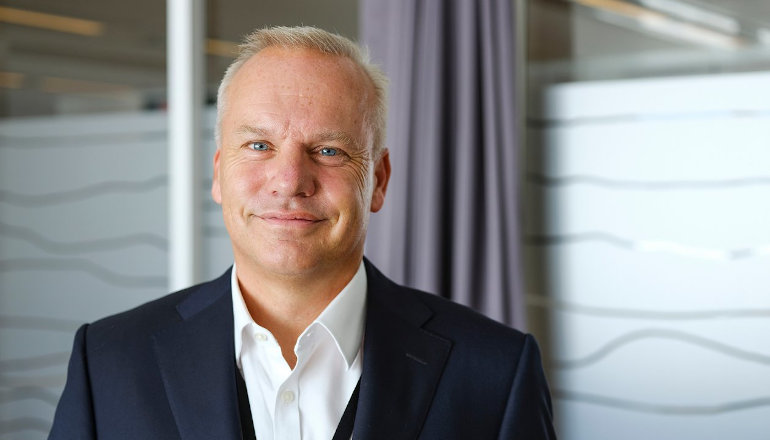
Equinor chief executive Anders Opedal (pictured) said: “By producing oil and gas with low greenhouse gas emissions, we reinforce the competitiveness of the Norwegian shelf, maintain activity in the industry and safeguard future value creation.
“Trollvind is a concept where renewable energy works to facilitate several objectives; helping cut emissions through electrification, delivering power to an area where shortages have already created challenges for new industrial development, and Norway maintains its position as a leader in the industrialisation of floating offshore wind.
“A full-scale floating offshore wind farm like Trollvind could boost momentum towards realising the Norwegian authorities’ ambition to position Norway as an offshore wind nation, building on expertise from the oil and gas industry.”
Last year, the Norwegian parliament (Stortinget) decided to intensify emission reductions requirements from the Norwegian continental shelf to 50% from 40 by 2030.
To achieve this target, large-scale industrial single-point emission sources, such as offshore oil and gas installations, must reduce their emissions. Electrification of installations with long remaining lifetimes will be a key initiative to succeed with this transition.
Opedal added: “This initiative provides the supplier industry with predictability and an offshore wind portfolio to work with in the years ahead.”
Shell’s global EVP renewable generation Thomas Brostrom said: “This can be a fantastic opportunity for Norway and for the industry.
“Using our integrated capabilities to decarbonise existing operations and accelerate offshore wind development is exactly the kind of action our companies need to be taking to further society’s progress towards net zero by 2050.”
TotalEnergies managing director and country chair Phil Cunningham said: “We are excited about the possibilities to supply our energy production offshore with new renewable power. This project confirms Norway’s leadership in green energy production and our experience that working together is a value enabler.”
Petoro chief executive Kristin Kragseth said: “In this study, we build on our Norwegian competitive edge and strengths: technology development and collaboration.
“The cooperation between all parties is crucial to realise the transformation of the industry to a low-carbon future.
“This is important for Norway as a mature oil and gas region and will ensure a competitive Norwegian shelf also in the future.”
The partners said that Trollvind can be realised by building on the good collaboration established between government authorities and the industry through Hywind Tampen.
Experience can be transferred and learning utilised while at the same time identifying and implementing good co-existence solutions from an early stage, they said.