


Energy Ministers from the North Seas Energy Cooperation group and the European Commissioner for Energy Kadri Simson have agreed at a meeting today to tackle barriers to the accelerated deployment of multinational hybrid offshore wind energy as well as other relevant projects.
The North Seas Energy Cooperation is a EU regional forum made up of Belgium, Denmark, France, Germany, Ireland, Luxembourg, the Netherlands, Norway and Sweden aimed at facilitating the integration of large scale offshore wind in the European energy markets and developing a more coordinated offshore grid development.
The meeting, under the German Presidency, also agreed on the key role of offshore wind energy in reaching Europe’s renewable energy and climate targets up to 2050.
The Commission is encouraged to develop an enabling framework at EU level, which consists of EU guidance to member states on the implementation of cross-border projects, adequate electricity market arrangements and improved and efficient EU financing.
The potential European contribution of offshore wind energy by 2050 amounts to more than 10 times of today’s installed capacity of 22GW.
However, barriers exist to the implementation of joint and hybrid projects.
These include different rules between the countries for the use of the seabed, substantial coordination efforts to set up joint and hybrid projects, potentially unbalanced allocation of costs and benefits across the involved member states, or competing interests regarding the use of scarce offshore areas for infrastructure to channel offshore wind and to trade between countries.
Areas that need to be tackled by enhanced coordination are the design and timing of offshore wind tenders and methodologies to assess the distribution of costs and benefits of the joint and hybrid projects, the statement said.
Ministers and the European Commissioner also agreed to improve coordination regarding offshore grid planning and onshore grid connection of offshore wind farms.
They also aim to improve coordination between maritime spatial planning and offshore grid planning to facilitate the joint ambition of offshore wind energy deployment in the region.
German Energy Peter Minister Altmaier said: “Joint and hybrid offshore wind projects are expected to play an essential role in reaching the energy and climate targets up to 2050.”
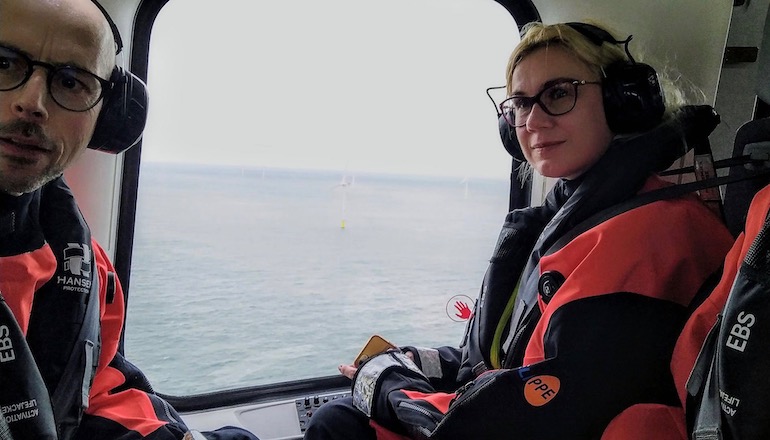
Simson (pictured) said: “Today’s meeting is the European Green Deal in action. Only by stronger cross-border cooperation, such as between the North Seas countries, will we be able to sufficiently scale up renewable energy production and make Europe the first climate neutral continent.”
Work that will be carried out before the next meeting in December will focus on the further development of concrete proposals for hybrid projects, maritime spatial and offshore grid planning, and a long-term vision for the role of offshore renewable energy until by 2050, including the role of hydrogen.