


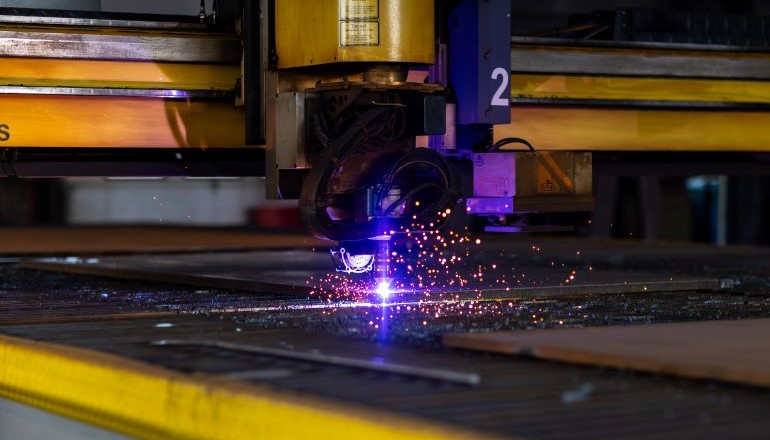
Fabrication of high-voltage alternating current (HVAC) modules has begun for Belgium’s Princess Elisabeth offshore energy hub following a steel cutting ceremony at HSM Offshore Energy’s yard in Schiedam, the Netherlands.
The infrastructure will form the backbone of the island’s AC transmission system and support the delivery of at least 2.1GW of wind power to the mainland.
The modules – including substations and a facility unit – will be installed on the artificial island, which lies 45km off the Belgian coast in the Princess Elisabeth Zone.
They are being delivered by the HSI Pemac consortium of HSM Offshore Energy, Smulders and IV, which holds the EPCIC contract awarded by Belgian transmission operator Elia.
Engineering works, including detailed 3D modelling, are underway at IV’s offices in Papendrecht, with prefabrication taking place at Smulders’ Belgian facilities and HSM’s Schiedam site. Final assembly will occur in Schiedam and Vlissingen.
Hans Leerdam, commercial director at HSM Offshore Energy, said: “This first steel cut is more than the start of fabrication – it is a tangible sign that one of the most strategic energy projects in Europe is moving from plan to reality.”
Elia Transmission Belgium chief executive Frederic Dunon said the HVAC works show the project is progressing steadily.
He added: “The Belgian government’s recent decision to develop an alternative approach for the HVDC components will ensure we can maintain the strategic ambition of the project in a more cost-effective way.”
The Princess Elisabeth hub will be the world’s first artificial energy island. It will initially connect two offshore wind farms and integrate their output into the onshore grid, strengthening Belgium’s long-term electricity supply and advancing Europe’s energy transition.