


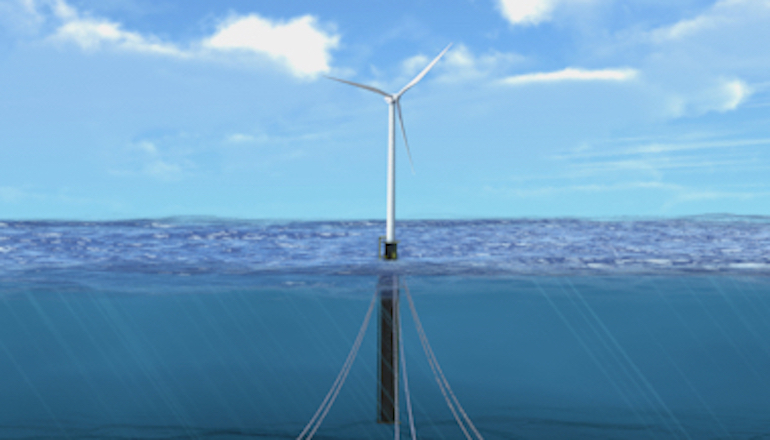
A consortium led by Fugro has designed a mooring line fatigue tracker that monitors offshore floating wind turbines.
The tracker fuses the motion and position measurements of floating hulls with a simulation model to monitor fatigue.
Fugro and its partners, AS Mosley and the University of Strathclyde, are now identifying opportunities to work with floating wind developers on pre-commercial projects to trial the solution offshore.
The consortium received funding from the Scottish government to develop the tracker in March 2020 through the Floating Offshore Wind Technology Acceleration Competition, which was run by the Carbon Trust’s Floating Wind Joint Industry Project.
Fugro said it worked with AS Mosley and the University of Strathclyde to combine a physics-based simulation model with fatigue analysis to develop a methodology.
“Instead of the current conventional five-year subsea inspection regime, mooring line fatigue will be tracked so that inspection activities – which require vessels and remotely operated vehicles – are only carried out when necessary,” the company said.
Another benefit is that the monitoring is continuous and can be used to detect any problems or failure scenarios, such as anchor drag or trawler snagging, as they happen for quick resolution, it added.
Carbon Trust manager Hannah Evans said: “We are really pleased to see the progress Fugro, AS Mosley and the University of Strathclyde have made in developing their mooring line fatigue tracker over the past 12 months.
“This project has demonstrated the value of collaboration between industry and academia in Scotland to deliver innovative solutions, and addresses challenges faced by the floating wind industry to monitor mooring lines safely and cost-effectively.
“Fugro structural monitoring project manager Stuart Killbourn said: “Working with AS Mosley and the University of Strathclyde to repurpose methods and expertise from the oil and gas industry for offshore renewable energy has been incredibly exciting.
“Over the coming decade, efficient and reliable remote monitoring systems will be vital for the deployment of floating wind farms, which in turn are so important for meeting net-zero carbon targets for a safe and liveable world.”