


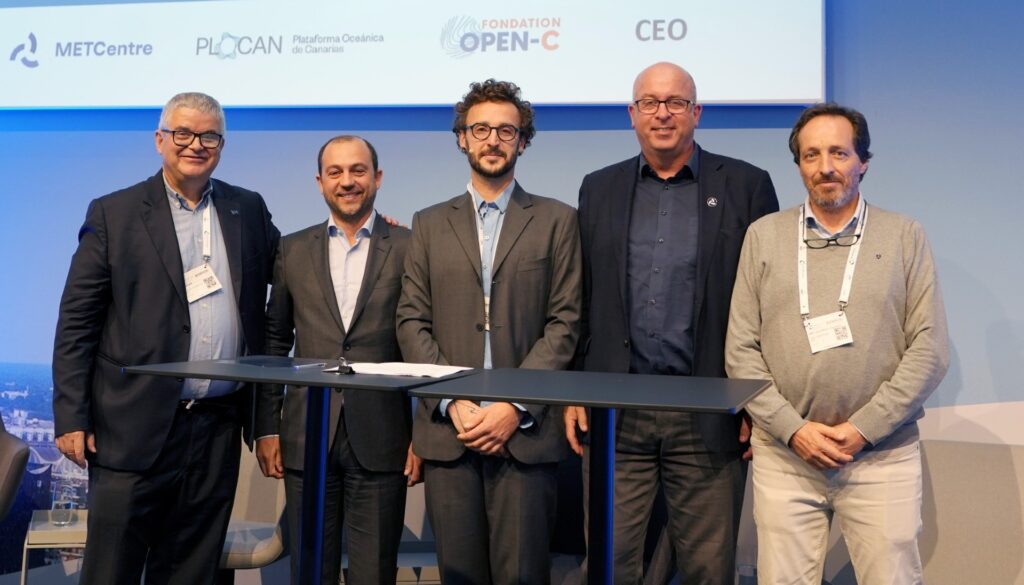
Five European offshore wind test sites have formed a new alliance, aiming to improve conditions for floating wind demonstration projects, at WindEnergy Hamburg.
BiMEP, CEO, Foundation Open-C, METCEntre and Plocan have created HiPoTeSis.
This collaborative network of five operational offshore demonstration test sites aims to provide the European Union with the future high-power infrastructure for testing new floating wind projects.
The alliance will meet the common challenges of the sector, the most important being permitting, they said.
In a seminar hosted by World Forum for Offshore Wind at WindEnergy Hamburg the test sites presented their action points.
These included implementing fast track permitting system for demo projects, inclusions of two annual demo projects in relevant EU calls, create new European support scheme for co-investments in infrastructure and initiate better incentives for data sharing.
Arvid Nesse, chief executive of METCentre in Norway, said: “Testing and demonstration projects are absolutely necessary to bring costs down in floating offshore wind.”
Bertrand Alessandrini, general manager of the OPEN-C Foundation, said: “With a target of 10GW by 2030, it is crucial to standardize and industrialize floating technologies between 2024 and 2030.
“To remain a leader, the EU must develop this infrastructure and act now to stimulate innovation.”
In Europe, test sites are subject to the same permitting procedures as commercial parks, which take years to complete.
Establishing grid infrastructure at the test sites to prepare for the next generation of floating offshore wind turbines requires substantial capital investments, the alliance said.
Substations and export cables to shore are examples of infrastructure that need to be in place, it added.
In their agreement, the test centres point out that the floating offshore wind industry in Europe can secure global leadership.
The test centre alliance HiPoTeSis calls for more incentives to share data from EU-funded projects to drive innovation.