


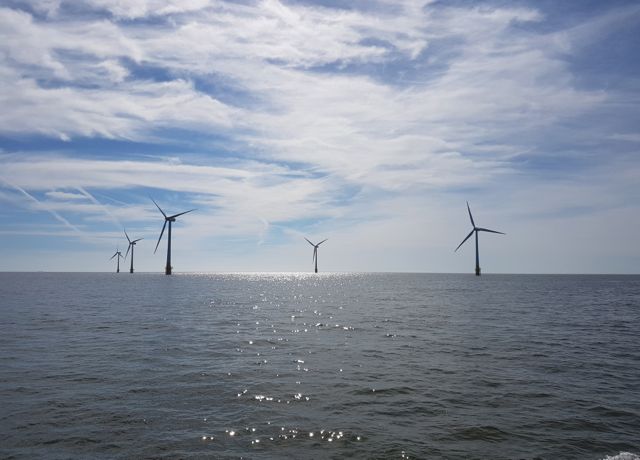
Over 3GW of wind power capacity can be installed in Lithuania’s Baltic Sea territory, according to a new study.
The Lithuanian government tasked scientists from Klaipeda University to conduct the analysis of offshore wind development in the Baltic Sea, which found potential for 3.35GW.
The ‘Study for the Identification of Priority Parts of Lithuania’s Territorial Sea and/or the Lithuanian Exclusive Economic Zone in the Baltic Sea where the Development of Power Plants Using Renewable Energy Sources is Expedient’ will become the basis for developing the country’s offshore wind resource.
According to preliminary estimates, wind farms in the Baltic Sea could begin producing electricity by 2030.
The best location for offshore wind development is 30km from the shore of Sventoji, where wind speeds reach 9-10 metres per second and the sea depth is 25-40 metres, the study found.
The study also presents an analysis of the floor, depth and hydro-meteorological conditions of the Baltic Sea, including wind, waves, flows, temperature and salinity.
Comprehensive summaries have been drawn up concerning biodiversity research and observation data, and intelligence engineering and geological surveys, according to Klaipeda university.
Existing and planned shipping routes were also identified in the report, as well as port development plans, engineering facilities, and cultural heritage and marine history sites.
Minister of Energy Zygimantas Vaiciunas said: “Offshore wind is one of the most promising and effective sources of renewable energy, and many countries are looking at its development.
“Our goal is to lay a solid foundation for the development of offshore wind in the Baltic Sea and to maximise the potential for its development.”
The university provided the Ministry of Energy with proposals for a few alternative areas in the marine territories that could be used to develop wind farms with capacities of 200MW, 300MW, 400MW or 500MW.
In terms of next steps the Lithuanian Energy Agency (LEA) will initiate preparation of a special plan for the territory and a strategic environmental impact assessment.
The research conducted and the modelling results will also help LEA experts to conduct a feasibility study for connecting to onshore electricity transmission networks, as well as an economic cost-benefit analysis of the development of offshore wind.
Once these preparatory works are done, preparation will begin of proposals regarding the parts of the marine territories and the power capacities proposed to be developed, as well as permits and tendering procedures.
The Lithuanian government will approve these documents.