


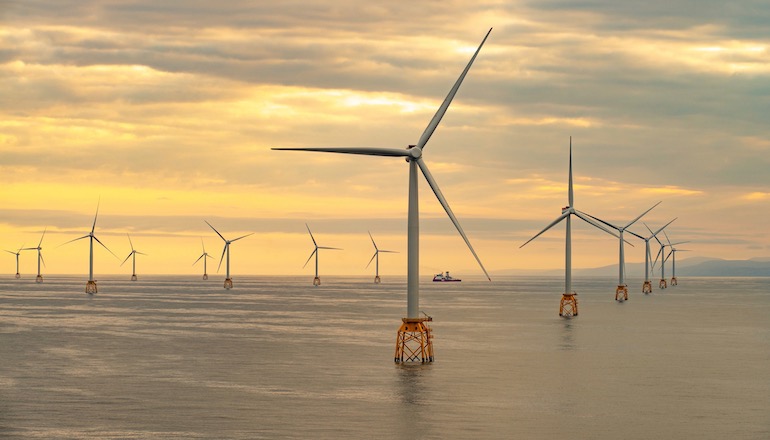
New installed offshore wind capacity has help propel renewables share of UK electricity generation to over 35% in the second quarter of 2019, setting a new record for the period.
According to statistics from the UK Department for Business, Energy and Industrial Strategy (BEIS) the share of renewables in the UK’s electricity generation rose to over 35.5% in the second quarter of 2019 from 32% in the same quarter of last year.
At the end of the second quarter of 2019, wind accounted for just over a half of total renewable generating capacity with around 30% coming from onshore wind and 20% coming from offshore wind. After onshore wind, solar PV had the highest share of renewable technologies at 29%.
RenewableUK strategic communications director Luke Clark said: “The latest official statistics show wind is leading the way in cleaning up the UK power system, with coal generation dropping to historic lows.
“This month’s landmark steps forward for offshore wind, with a record amount of new capacity secured at record low prices and a further round of development announced, means that we’ll see renewables reaching ever higher levels in the next ten years.
“Now is the time to push all of our renewable energy sources, including onshore wind and innovative tidal and floating offshore wind, so that we reach net zero emissions as quickly as possible”.
Total installed renewable electricity capacity reached 45.9GW at the end of the second quarter of 2019, a 7.9% increase on a year earlier, and a 1.9% increase on the first quarter of 2019, with two thirds of the increase on last year’s capacity coming from wind.
The largest increase in absolute terms was in offshore wind capacity which rose by 18% to 9.2GW. The largest sites to be added over the past 12 months are Hornsea and Beatrice.
Hornsea started generating in the first quarter of 2019 with further capacity coming online in the second quarter of 2019 bringing total capacity to 665MW.
Beatrice also came online in stages; capacity has been added in each of the last four quarters and stood at 588MW when the project was completed in the second quarter of 2019.
Onshore wind capacity increased by around 900MW, with 34 new sites in the second quarter, the largest of which were Kype Muir (88MW), Middle Muir (51MW) and Clocaenog Forest (18MW).
Renewable electricity generation was 27.1 terrawatt hours (TWh) in the second quarter of 2019, an increase of 9.9% on the same quarter in 2018, but 14% lower than the first quarter of this year.
Onshore wind generation rose by 13% to 6.1TWh.
Offshore wind increased by more than a quarter to 6TWh, which was still 30% lower than the first quarter of 2019, when average wind speeds were much higher.
The largest increase among the other technologies was for plant biomass, mainly wood pellets, which increased by 8.5% to 6TWh due increased capacity.
Solar generation decreased 0.3% as the small increase in capacity was offset by lower load factors from lower average daily sun hours compared with the second quarter of 2018.
Bioenergy had the largest share of renewable generation, at 34%, while 22% came from onshore wind, with offshore wind also accounting for a further 22%, while 18% came from solar photovoltaics and 3.5% from hydro.