


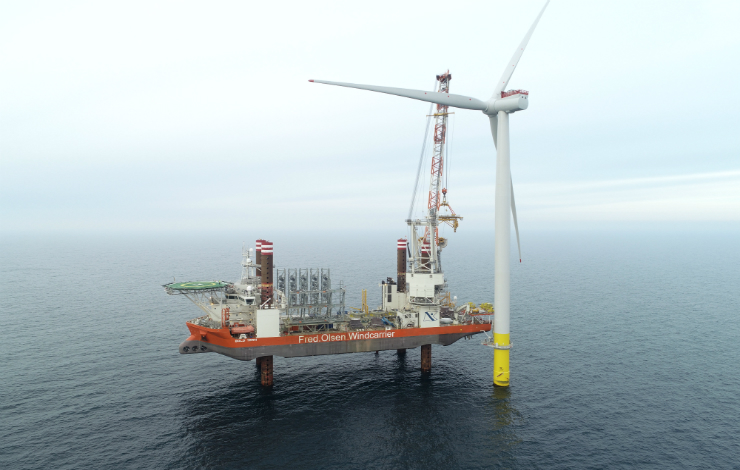
Orsted said it is confident planning permission will be forthcoming later this year for its 2400MW Hornsea 3 development after a final decision on the offshore wind project was delayed by BEIS secretary Alok Sharma yesterday.
BEIS will now decide the fate of Hornsea 3 on 31 December 2020.
In the delay decision yesterday, Sharma said he is “minded to” approve the development, providing Orsted can give further information about how the project will compensate for likely harm to kittiwake populations on the Flamborough and Filey coast in Yorkshire.
RSPB conservation director Martin Harper said: “We welcome the decision on Hornsea 3 offshore wind farm as it shows that the UK Government is finally reconciling the wicked challenge of reconciling demand for offshore wind and conservation of seabirds.
“Offshore wind is the right technology when we can find the right place for it. Governments across the UK have rightly set ambitious targets for offshore wind to help tackle climate change, but these must be supported by good planning to avoid damaging our most important areas for seabirds and other marine wildlife.
“We need to address the climate and ecological emergency in an integrated way.”
Harper said the Hornsea 3 decision recognises that the predicted impacts from the wind farm added to those from other wind farms already approved will be harmful to the UK’s globally important seabird colonies such as kittiwake at Flamborough and Filey Coast Special Protection Area in North Yorkshire.
“Orsted will be under no illusion that proving they can deliver successful compensation that genuinely helps kittiwakes will be extremely difficult and we are concerned this may be impossible to achieve.
“However, we are looking forward to working with the company to explore different options as well as support the Government in assessing the viability of any proposals,” he said.
Harper added: “However, the decision on Norfolk Vanguard, against the recommendations of the Examining Authority, is very concerning.
“If decision-makers continue to ignore the bigger picture resulting from adding more and more turbines into already crowded seas we risk losing our seabirds to ‘a thousand cuts’ where no individual scheme is responsible but collectively the impact is devastating.”
Orsted said it was reviewing Sharma’s comments and would continue working with stakeholders as it worked to provide further evidence.
“We are pleased that the secretary of state is minded to grant consent and recognises the contribution the project would make towards the national need for renewable energy,” an Orsted spokesperson said.
“We are now reviewing the full detail of his comments and, while disappointed at the further delay, are confident of providing the evidence requested to ensure that consent will be granted later this year.
“We will continue to work closely with stakeholders and local communities as we look to take the project forward sensitively and sustainably.”
Hornsea 3 will feature up to 231 turbines and cover an area of 686 square kilometres.