


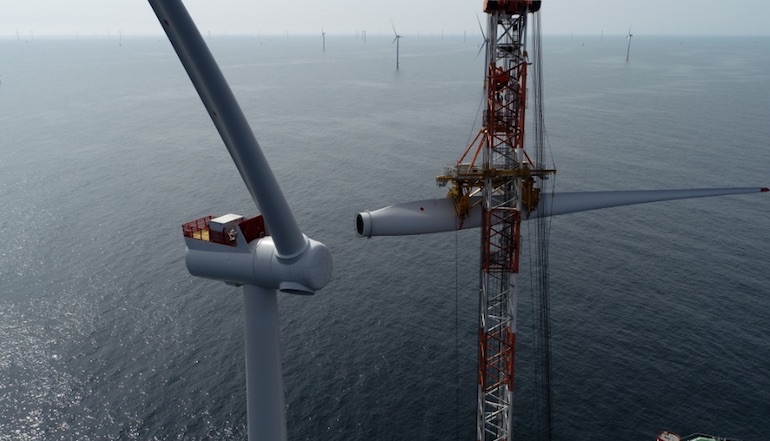
The UK Secretary of State for Business, Energy and Industrial Strategy Alok Sharma has granted planning consent to Orsted’s 2400MW Hornsea Three project in the North Sea.
UK planners have given Orsted permission to install a maximum of 231 turbines featuring rotors up to 265 metres in diameter and tip heights of 325 metres off the coast of Yorkshire.
The final decision comes some 26 months after Orsted submitted its final plans for the project for approval, which was initially expected to be granted in 2019.
A consent ruling has been delayed owing to concerns raised during consultations about possible impacts form the project on kittiwakes breeding at protected sites on the Yorkshire coast and potential harm to seabed protected by conservation legislation.
The latest delay came in summer when Sharma wrote he was ‘minded to approve’ the project subject to further consultations over compensation packages to offset any damage.
In his approval letter for the project Sharma said the final consent includes plans to limit any damage to sensitive ecosystems.
“Conditions have been included in the DCO to secure the provision of compensation in relation to the impacts on the Flamborough and Filey Coast Special Protection Area and the North Norfolk Sandbanks and Saturn Reef Special Area of Conservation and The Wash and North Norfolk Coast Special Area of Conservation,” Sharma wrote.
Compensation measures include the construction of mussel beds, recovery of ghost fishing gear from the sea and a specially designed ‘kittiwake compensation strategy’ that will create nest boxes for seabirds.
“When examining the application and making their recommendation, the Examining Authority took full account of views from communities, particularly those near the North East coast of England who might be affected by this proposal, alongside national policy and evidence of the need for the project,” added Planning Inspectorate chief executive Sarah Richards.
Orsted head of region UK Duncan Clark said the decision “is the culmination of a thorough and rigorous process which ensures that the project can deliver much needed clean energy at scale for the UK, whilst ensuring the potential environmental impacts of the project are minimised”.
He said the developer has “worked closely” with key stakeholders to develop a “robust compensation plan” focused on the implementation of onshore artificial nesting structures specifically designed for kittiwake.
The “unique” plan demonstrates that the industry can continue to deliver on the government’s offshore wind ambition of 40GW by 2030 in a “sensitive and environmentally responsible way”.
“Climate change remains a very serious threat to our environment and habitats and there is an ever pressing need to act. Once complete, Hornsea 3 could provide clean power to over 2 million UK homes and offset over 128.2 million tonnes of carbon dioxide over its lifetime,” he added.
“It will make a significant contribution towards meeting the UK’s net zero commitments and in the crucial fight against climate change. We will now be reviewing the full Development Consent Order and will continue to work closely with stakeholders and local communities as we take the project forward.”
RenewableUK chief executive Hugh McNeal meanwhile hailed the decision as a “landmark” one for the country’s net zero ambitions.
“Investing in large scale offshore wind power is good for our environment and our economy, boosting productivity and creating thousands of high-quality jobs. Green growth will be vital to support our long-term economic recovery in the years ahead,” he said.
“This major project will also help us to maintain our global lead in offshore wind, as well as building up our UK supply chain.”