


Orsted will be offered the first production of lower-emission steel from Dillinger, subject to availability and commercial terms and conditions.
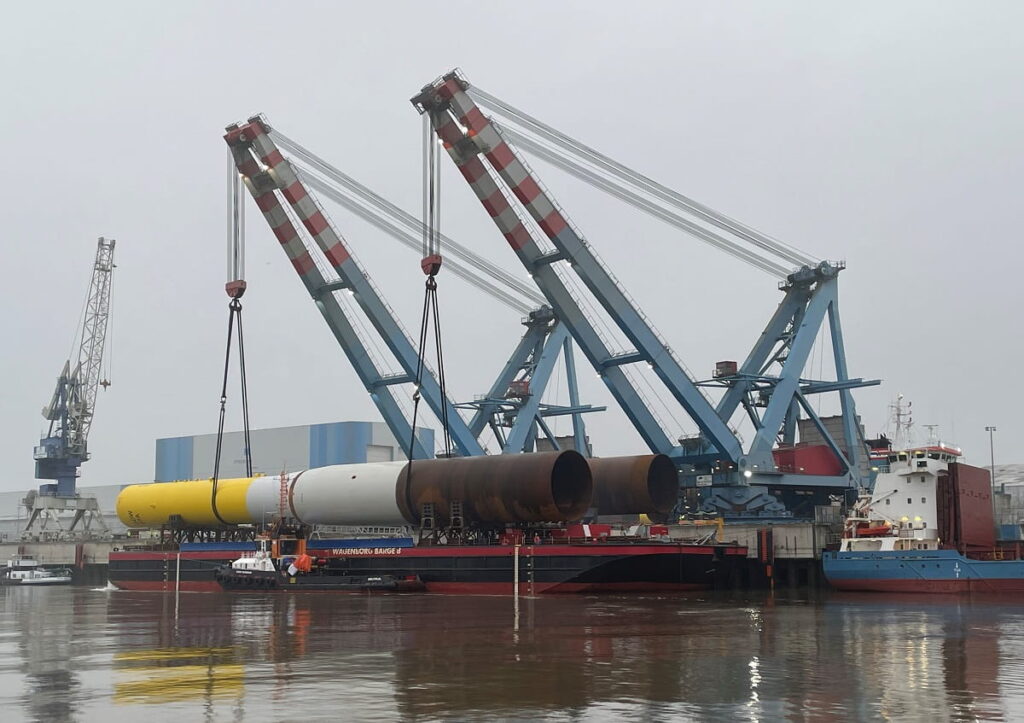
The metal plates form a part of the offshore wind monopile foundations and are intended to be used for future projects.
Taking the current technology outlook into account, the reduction of the process-related carbon emissions from production is expected to be around 55%-60 % compared to conventional heavy plate steel manufacture, Orsted said.Under a large-scale supply-agreement entered into in 2022, Orsted will procure significant volumes of regular heavy plate steel from 2024.
This will give the company access at scale to and visibility of the most crucial raw material in offshore wind while providing Dillinger with the needed support to accelerate investments in new lower-emission steel production, according to the Danish developer.
Orsted expects to be able to procure lower-emission steel produced at Dillinger’s plant in Dillingen, Germany, from 2027-2028. This follows the EU’s recent passing of the Net Zero Industry Act, which makes non-price criteria in renewable energy auctions mandatory within the EU.
Orsted said the agreement with Dillinger not only helps accelerate the decarbonisation of the steel industry; it also provides the Danish developer with the optionality to deliver on expected decarbonisation criteria in coming auctions when they materialise. Orsted’s chief procurement officer Virginie Van de Cotte said: “At Orsted, we have closer ties to the supply chain than any other offshore wind developer, and we’ll leverage these ties to support our business as well as the green transformation at large.
“Long-term offtake agreements like this one are key to decarbonising hard-to-abate materials such as steel because it takes clear demand signals to drive investments in the technologies needed to decarbonise production.
“With this MoU, we’re pleased to help support Dillinger’s development of lower-emission steel facilities in Europe.
“This is an agreement which will also enable Orsted to further diversify its supply chain, secure capacity, and deliver on expected future costumer demand.”Dillinger chief executive Stefan Rauber added: “The agreement with Orsted proves that steel made in Germany is relevant for the success of the climate and energy transition, and that it has a future.
“With the support of the German federal government, we’re now investing in the transformation of our production facilities to be able to produce carbon-reduced steel from 2027 onwards.”Foundations are one of the largest sources of carbon emissions in an offshore wind farm’s life cycle, accounting for 21%, and reducing those emissions is key for Orsted to reach its 2040 science-based net-zero target, the developer said.