


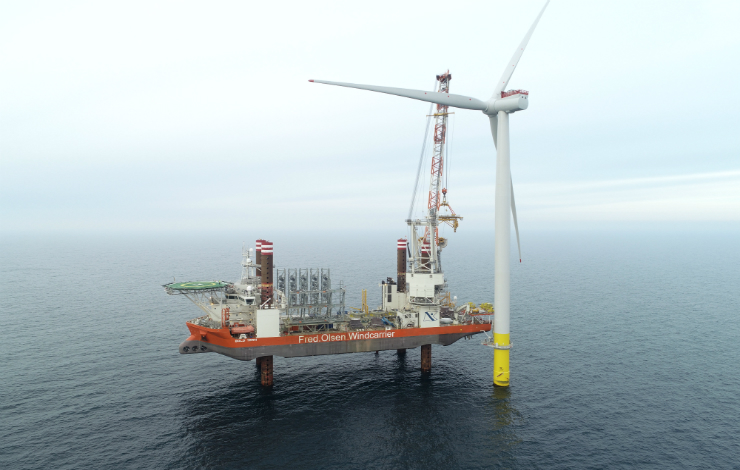
UK bird charity the RSPB has expressed concern over the government’s recent decision to green-light Orsted’s 2.4GW Hornsea 3 offshore wind farm.
The project secured consents late last week following months of delay, during which the developer put in place a compensation package to offset potential harm from the project on populations of Kittiwakes breeding on the Yorkshire coast.
RSPB director for global conservation Martin Harper called the consent decision “nothing short of a gamble” with the future of Kittiwake populations and said there is not enough evidence to show the compensation measures will work.
“The government has accepted that the expansion of offshore wind turbines in this part of the North Sea will be damaging to seabird numbers in the surrounding area and is putting its faith in an unproven compensation scheme that will attempt to balance the loss of globally important seabirds at one site by encouraging numbers elsewhere,” he said.
“Concerningly it may be a decade or more before we know if it has been successful by which time Hornsea 3 and many more projects will have been constructed and the damage to our seabird colonies at the Flamborough and Filey Coast Special Protection Area in North Yorkshire may be irreversible.”
Harper called for a more strategic approach to mitigate possible harm from future offshore wind development and said the RSPB is keen to work with industry and planners to support the development of future offshore wind farms.
He said: “Industry alone cannot reconcile the challenge of increased deployment and threats to nature.
“These are a symptom of poor planning and must be urgently addressed by the UK government if they are to deliver on their ambitious targets for offshore wind.”