


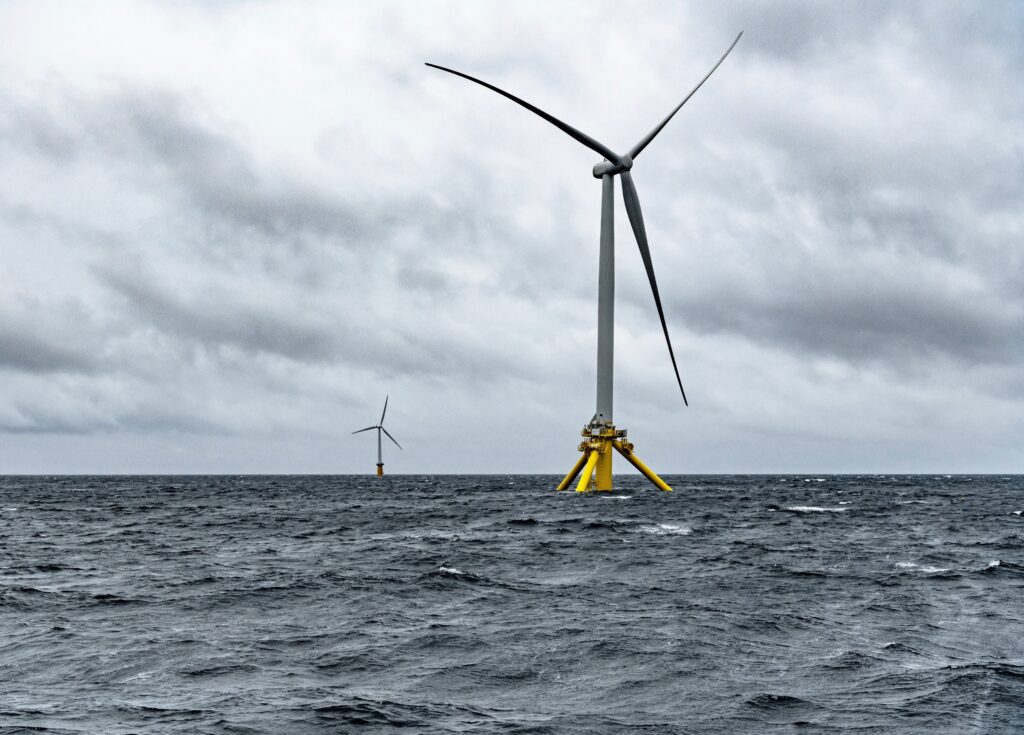
The floating wind TetraSpar Demonstrator has been commissioned and is now in operation, anchored in place at 200 metre water depth off Norway’s coast.
The project will now enter its test phase where data on the performance and characteristics of the TetraSpar floating foundation will be captured and analyzed to pave the way for commercial-scale floating wind projects, according to RWE Renewables.
Earlier this summer, the TetraSpar Demonstrator reached its destination at the METCentre test site after a tow of 360 nautical miles from the port of assembly in Grenaa, Denmark.
The commissioning of the 3.6MW Siemens turbine is the last in a string of milestones for the TetraSpar Demonstrator.
The demonstration project has shown that Stiesdal’s ‘Tetra’ concept remains on target to offer important advantages over existing floating wind concepts, RWE said.
This includes the potential for leaner manufacturing, assembly, and installation processes, and with lower material costs.
TetraSpar Demonstrator ApS chairman of the board Henrik Stiesdal said: “This is a huge milestone for the project.
“First and foremost, we are happy to have completed all phases of the project without any significant safety incidents, even though we have deployed a very innovative project with a range of world’s first elements.
“The deep experience of our project partners has been invaluable in this regard.
“Next, we are obviously very pleased that the new technologies, a few years ago only ambitions and design proposals, have now come to fruition.
“All indications are that our key target, to accelerate the industrialization of floating offshore wind, can actually be met, not only at prototype level but at large scale.”
RWE Renewables chief executive for offshore wind Sven Utermöhlen added: “This project has been both challenging and inspiring.
“The spark of genius with the TetraSpar concept is its industrialized manufacturing and assembly methodology, which we think is crucial for long-term cost reduction.
“Our deep involvement in this project means we have now gathered first- hand evidence about how this approach can be scaled up to commercial projects.
“This project has taught us more crucial lessons than we could have ever expected, and it has been great to work so collaboratively with our project partners to safely deliver such an innovative technology.
“It has been particularly interesting to see how important it is to transfer RWE’s experience in seabed-fixed offshore wind into our floating projects.
“This project’s success motivates us to keep on delivering cutting edge innovation.”
The upcoming test phase will provide the four partnering companies with important knowledge and opportunities to further refine the TetraSpar technology.
The partners will make full use of the results obtained to expand the possibilities of offshore wind power and thereby contribute to the realisation of a clean and sustainable carbon-neutral society.