


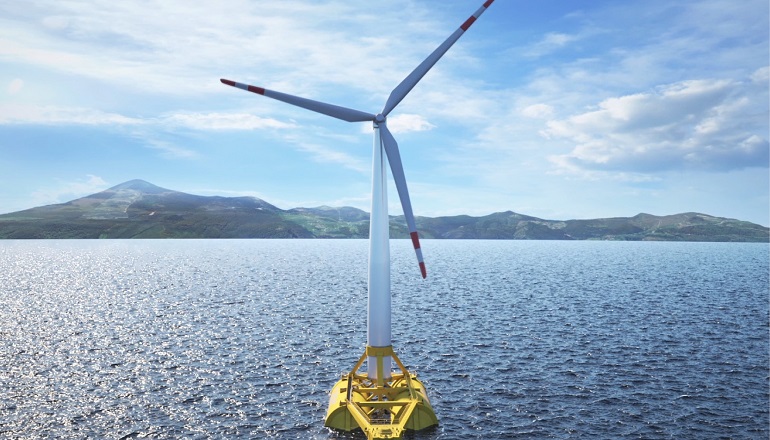
A study funded by RWE has concluded that Scotland could become a world leader in producing low carbon concrete foundations for floating offshore wind farms.
The study identified potential business opportunities from the current ScotWind seabed leasing round, and calls on Scottish politicians, project developers, suppliers and industry experts to join forces and investigate how best to unlock the potential, while maximising opportunities for local investment.
The study “closes an important gap” in the industry’s understanding of the scale and business potential of producing concrete foundations for floating offshore wind farms.
It also further expands RWE’s knowledge of floating offshore wind, gained from three major floating wind technology trials it is undertaking with partners around the world.
RWE carried out the study in partnership with Offshore Renewable Energy (ORE) Catapult, through its Floating Offshore Wind Centre of Excellence (FOWCOE).
The study was also supported by offshore wind industry experts at the Concrete Centre.
Floating foundations use both steel and concrete designs, but most research in the UK to date has focused on steel designs.
The study addressed this by testing the feasibility of a production facility, capable of building 33 concrete floating foundations for 15 megawatts (MW) turbines each year.
Researchers reviewed Scotland’s existing experience and capabilities for producing specialist concrete focused on using low carbon methods and materials.
It found that both Scottish ports and industry have existing experience and skills from producing concrete at scale that can be applied to this low carbon alternative.
The country is therefore well placed to manufacture the foundations, attracting significant investment into the Scottish and UK supply chain.
In terms of scale of opportunity, the study noted that just a single project would require a volume of low carbon concrete potentially up to four times greater than that needed to build one of Scotland’s largest infrastructure projects, the Queensferry Crossing.
It also said that to keep costs low and reduce carbon footprint, concrete production should take place at or close to the quayside where the foundations would be deployed.
It identified that there are four Scottish ports – Hunterston, Kishorn, Port of Cromarty Firth (Invergordon) and Ardersier, as well as clusters of potential sites, including the Cromarty Firth and the Forth and Tay, which could potentially meet the capacities required.
Tom Glover, UK country chair at RWE, said: “This report, commissioned by RWE, demonstrates the significant business potential from the manufacture of low carbon concrete foundations, and makes clear that Scotland is best placed to realise that.
“Committed to invest around £15 billion through 2030 to expand its clean energy capabilities in the UK, including Floating Wind, RWE is keen to work in collaboration with all parties to maximise these opportunities for the country’s economy and workforce.”