


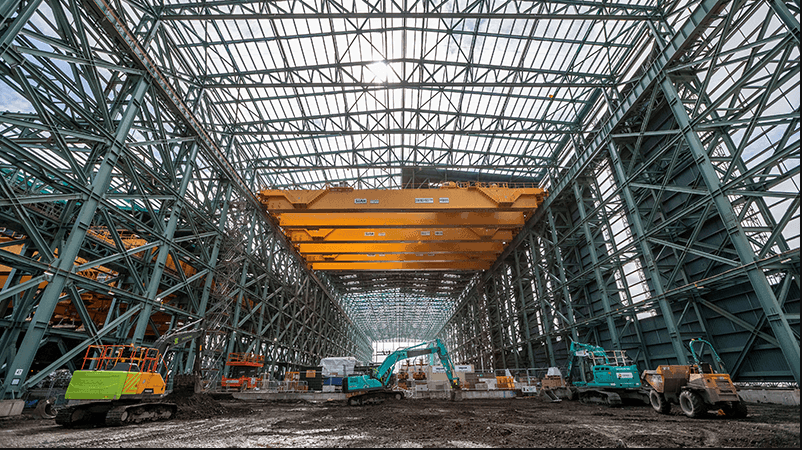
More than 150 workers will begin strike action at the SeAH Wind monopile factory in Teesside, England after rejecting a pay offer, according to the GMB Union.
Strikes will take place today (15 October) and every Wednesday for six weeks, the union said.
Staff rejected a 3.1% pay offer and imposed shift allowances that GMB said are “both below inflation and industry standards”.
Workers will also begin a continuous overtime ban after talks with conciliatory service Acas broke down earlier this week.
GMB Union organiser Andrew Blunt said: “SeAH is starting to look like a perfect example of the reality gap between promises of well-paid jobs in renewables and the daily experience of workers who are key to the transition to green energy.
“These talented workers are being asked to work unsociable hours, sacrificing time away from families at weekends and nights, but without being paid the industry standard rate to do it.
“Although bench marking has been addressed for some roles, it’s a pitiful pay deal and it’s just not right.
“Terms and conditions need to be retained and protected to future proof these industries – not to deskill and devalue the skills our members have.
“SeAH has received around £900m in public money – it should pay its workers properly.”
A SeAH Wind spokesperson told reNEWS it is “disappointed” that workers have chosen to participate in industrial action, adding it is “confident that our pay offer is both fair and competitive”.
“GMB’s current demands are unaffordable and unrealistic,” they said. “SeAH Wind is at a critical early stage of its journey. We are still in construction, commissioning, and ramping up operations and have yet to deliver our first monopile.
“We remain committed to creating high-quality jobs and fostering a positive working environment for the long term, while also protecting the long term viability of our company and the shared success at Teesside.”
The company also “strongly refutes” several “inaccurate and misleading” statements made by GMB Union, the spokesperson added.
“In particular, the union’s claims regarding government subsidies are wholly incorrect, our project is entirely privately funded,” they said.