


Tennet recorded earnings before interest and taxes (EBIT) of €806m in 2018, down on €897m for the previous year, but also saw an increase in underlying revenue, according to its latest financials.
In its 2018 annual report the German-Dutch grid operator’s underlying revenue of €4.176m increased by 6%, compared to 2017.
This was mainly due to higher reimbursements for grid expenses and additional revenue generated by a growing asset base, according to the transmission system operator (TSO).
Excluding special items, underlying EBIT increased by 10% to €819m in 2018. EBIT growth was mainly driven by the increase in its asset base, causing a higher return on capital reimbursement, said Tennet.
The TSO invested €2.3bn in infrastructure in the Netherlands and Germany in 2018, compared with €1.8bn in 2017, in energy transition and security of supply, achieving 99.9% grid availability. Around €876m was invested in the Netherlands and €1.370m in Germany.
As a result of the €2.3bn of investments, the net interest-bearing debt position increased by 13% to €8.712m as of 31 December 2018.
Tennet financial chief Otto Jager said: “Tennet delivered a financial performance in line with the expectations of our capital providers.
“To carry out our extensive investment programme, which also requires additional equity funding, we need to maintain full access to the financial markets.”
Tennet expects to invest €35bn in the next 10 years, of which €12bn will be spent in the Netherlands and €23bn in Germany.
The increase in the portfolio compared to the previous year is due mainly to an anticipated €5bn investment in offshore grid connections as part of Phase 2 of the expansion of offshore wind energy in the Dutch part of the North Sea.
Other large onshore projects in the Netherlands are ‘Randstad 380 kilovolt (kV) Noordring’, ‘Zuidwest 380 kV’, ‘Noordwest 380 kV’ and the upgrade of the national 380 kV ring.
In Germany the largest projects are the long-distance, underground direct current connections, SuedLink and SuedOstLink, connecting the northern part of the country with the south.
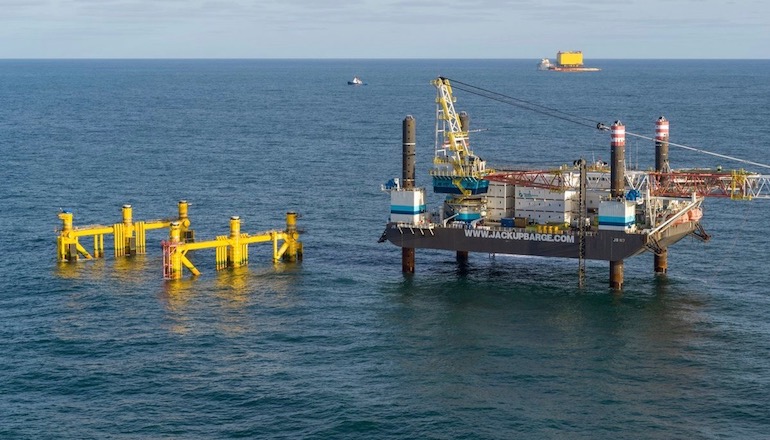
In 2018 the TSO brought onshore in Germany nearly 17 terawatt hours of offshore wind generated electricity.
The total connection capacity of Tennet for offshore wind farms grew to 6.2GMW, meeting the current goal of the German government.
This year the BorWin3 will be commissioned and the DolWin6 project in 2023 increasing the transport capacity for offshore wind within Tennet’s coverage to more than 8GW.