


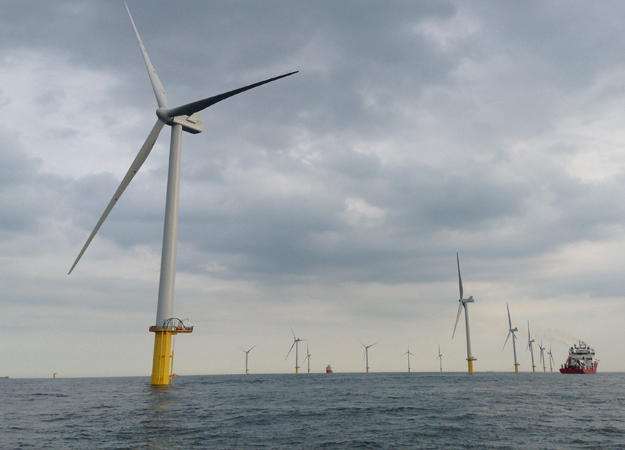
The Carbon Trust has launched the second stage of its Offshore Renewable Joint Industry Project (ORJIP) Offshore Wind to reduce consenting risks.
Over the next four years the next phase will provide a framework to identify, develop, initiate and conduct impactful, strategic research and development projects.
The activities will build on the existing evidence base in respect of the overall environmental impact of offshore wind projects, helping to better inform consenting authorities and offshore wind farm developers on the environmental risk that is associated with planned and existing offshore wind projects.
The ORJIP Offshore Wind programme was originally set up in 2012 to reduce consenting risk through addressing knowledge gaps for offshore wind farm developments funding research projects to better inform consenting authorities on the true environmental risk of offshore wind.
ORJIP is funded by public and private partners including EDF Renewables, EDP Renewables, Eon, Equinor, Innogy, Marine Scotland, Red Rock Power Limited, Shell, SSE Renewables, The Crown Estate and Crown Estate Scotland.
Scottish energy minister Paul Wheelhouse said: “As set out in our Programme for Government, we are committed to supporting research that will help address challenges with the sustainability of offshore renewables.
“Working collaboratively with others is at the heart of this and we welcome this partnership approach to strategic research that recognises interests across developers and public bodies, as well as the Scottish Government and our counterparts in the other devolved administrations.”
The Carbon Trust offshore wind director Jan Matthiesen said: “The Carbon Trust is extremely excited to launch ORJIP offshore wind stage two, with the backing of key players across the industry.
“Stage one created a solid foundation to build on and we look forward to working with the partners to advance a progressive programme of research to reduce the consenting risk associated with offshore wind development.”
ORJIP was originally launched in 2012. During stage one the programme made a significant contribution to the evidence base around the impact of offshore wind on marine life, which has allowed for more informed consenting decisions to be made.
Major studies included an investigation into the efficacy of acoustic deterrent devices on different marine mammals and a pioneering two-year study to record and quantify the avoidance behaviour of seabirds around offshore wind farms.
Over the next three months, the ORJIP offshore wind partners will engage with key stakeholders to invite participation in the programmes advisory network.