


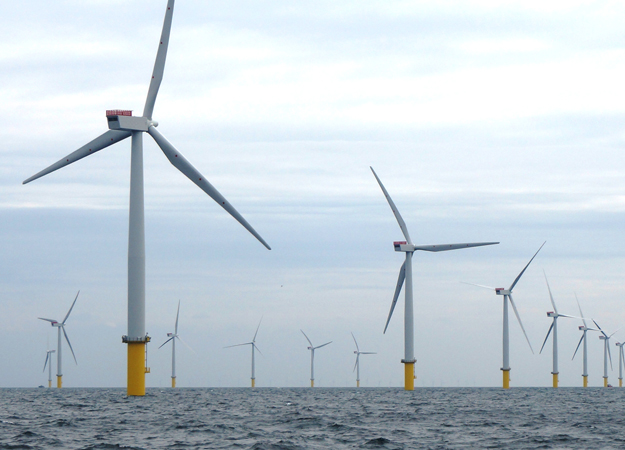
The UK will offer a record £800m to support new offshore wind farms in its upcoming AR6 budget.
The Department for Energy Security and Net Zero (DESNZ) confirmed that a total of £1bn will be set aside for the budget, with the lion’s share going into Pot 3 to develop offshore wind projects.
This represents a trebling of the size of the support package since last year’s CfD round failed to attract any bids from offshore wind developers amid concerns that the prices offered (capped at £44 per megawatt-hour) were too low.
The increased support will enable the UK for offer a higher price ceiling of £73/MWh to developers after Energy Secretary Claire Coutinho and her officials increased administrative strike prices last year.
In addition, a £10m ringfenced funds for tidal stream projects will be available for a third consecutive year. The Administrative Strike Price has increased for tidal stream by 29% to £261/MWh and 5% for wave energy to £257/MWh.
The total budget for Pot 2, where tidal projects will compete, has also been increased from £35m in 2023, to £105m in 2024.
CEO of ScottishPower Keith Anderson said: “The UK has been a global leader in developing renewables. After the failure of last year’s auction to attract any bids for new offshore projects, today’s announcement is an important test of the government’s resolve to get back on track with its own green energy targets.
“The government has taken a major step in the right direction today by quadrupling the available budget – a clear statement of intent in ramping up the ambition to bring cheaper, greener energy onto the system quickly.
“I expect the auction to be hugely competitive. Given the scale of the available pipeline, there is always the opportunity to go further, and so we would encourage the Government to revisit the budget in the light of developments.”
Scottish Renewables CEO Claire Mack added: “Scotland’s renewable energy industry welcomes today’s announcement. However, the funding allocated to offshore wind is not fully aligned with the increase in deployment required to meet the UK Government’s stated ambition of deploying 50GW by 2030.
“Industry was seeking a budget and framework that would repair the damage to the UK pipeline from last year’s empty offshore auction. We continue to urge ministers to work with industry in the months ahead to ensure this is delivered so that the AR6 budget matches the enormous economic potential of all renewable energy technologies.”
Energy UK Chief Executive Emma Pinchbeck said: “The government has listened to the energy industry about the need to deliver on the country’s ambitions for low carbon power with plans to deliver greater capacity from established renewables technologies like solar, onshore and offshore wind, as well as investing in new, emerging technologies like tidal, geothermal and floating offshore wind.
“It’s particularly welcome that the government has recognised the economic and market conditions facing offshore wind developers. A big increase in the budget for AR6 means investing more in homegrown sources of clean power that will bolster our energy security and reduce emissions – and bring wider economic benefits across the country.
“While we still face an uphill battle to meet the 2030 target for 50GW of offshore wind, today has sent out an important signal in the face of growing international competition for investment and will help re-establish the UK as a leader in offshore wind.”
However, the Association for Renewable Energy and Clean Technology (REA) said it was disheartened by the lack of sector wide measures introduced by Chancellor of the Exchequer Jeremy Hunt in today’s Spring Statement.
Frank Gordon, Director of Policy at REA said: “This is a political budget above all that does not reflect the urgency of Net Zero and while we welcome the CfD budget announced alongside the Spring Statement today, and extension of the windfall tax on oil and gas excess profits, this is disappointing overall.
“In particular, the Chancellor had promised the sector a response to the US investment in green supply chains and manufacturing at the last fiscal event and to see very little once again on how we can ensure the UK does not miss out on the vital green jobs and investment up for grabs is very disappointing. ”