


AceOn’s project to develop battery and hydrogen technology to power the marine vessels used for servicing offshore wind turbines, has been given the green light with UK government funding.
The £4.6m RESTORE project will seek to replace the fossil-fuelled power and propulsion systems of CTVs with green hydrogen and battery storage-based alternatives.
It is being funded by a grant from the Department of Transport as part of its Clean Maritime Demonstration Competition, which was run in September 2022 by Innovate UK.
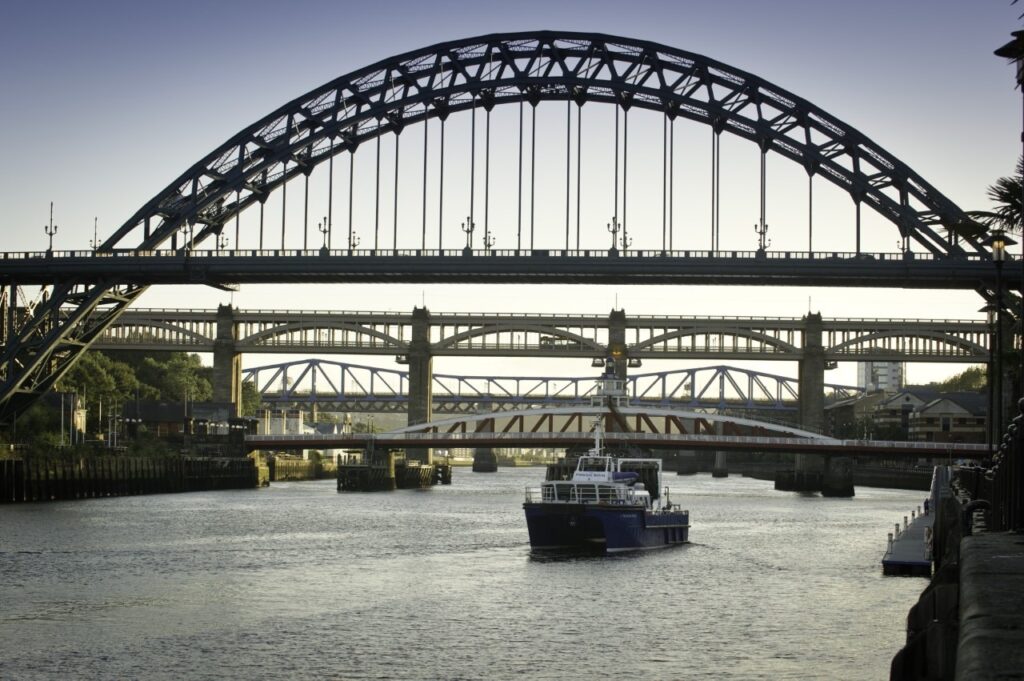
The test vessel for the study will be the Princess Royal Vessel (pictured); a CTV catamaran in Blyth, Northumberland.
RESTORE brings together a consortium of pioneering businesses and organisations from across industry and academia including Catapult Offshore Renewable Energy, Engas Global, Liverpool John Moores University, Newcastle University, Taurus Engineering and CAGE.
The partners will work collaboratively to develop, test and deploy scalable and cost-effective propulsion and power systems which can be retrofitted to existing vessels.
The scope of the study will include the design of offboard infrastructure to make green hydrogen for the vessel (using renewable resources to power a 50kW electrolyser).
It will also cover the use of both onboard hydrogen and battery storage as alternative propulsion methods, the design of a hybrid hydrogen internal combustion engine for the CTV, and the testing of a combined solution which uses both battery power and the Princess Royal’s existing diesel engines together.
The project is due to start in April 2023.
AceOn Energy managing director Mark Thompson said: “We have some of the brightest minds and the most innovative companies in the UK working on the delivery of this project which will create exciting new solutions to the problem of how to decarbonise the maritime sector.
“With hydrogen and battery technology together, we can extend the range of the vessel, which is something we haven’t seen demonstrated before because emission reducing technologies for the marine industry are very often limited to onshore/in port solutions.
“As well as reducing those maritime emissions, this project can also help close the loop in the offshore wind industry by zeroing the emissions which were previously created by servicing the turbines.
“It might seem like a small win, but as we move to an electrified future and more offshore wind plants, it will have a big impact.”