


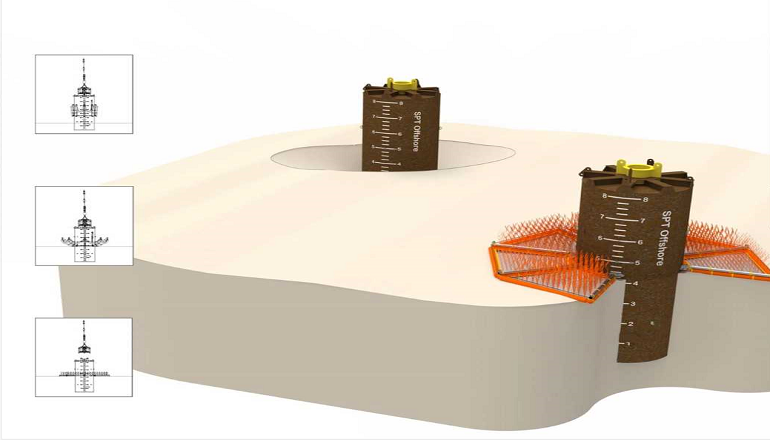
A £1m initiative to develop a self-installing scour protection system to reduce offshore wind costs has begun in the UK.
Seabed Scour Control Systems (SSCS), in Great Yarmouth, is leading the six-strong consortium for the 20-month Self-Installing Scour Protection for Offshore Wind Farms (SISProtect) project.
The system developed within the Innovate UK-backed project could save the average offshore wind farm approximately £8.6m, by installing the scour protection at the same time as foundation installation.
As part of the project, a prototype will be made and fitted to a suction bucket foundation at ScottishPower Renewables’ East Anglia 1 offshore wind farm.
SSCS is designing the prototype frond mat scour protection system, while SPT Offshore is providing the integrated deployment system.
The field trial follows laboratory scour tests already carried out by ScottishPower Renewables with SSCS at HR Wallingford.
In the field trial a suction bucket without scour protection will also be installed, providing a reference for the level of scour that will develop naturally at the site.
The reference suction bucket will also help ensure that the reduced scour measured at the protected suction bucket can be properly attributed to the frond mats.
Comparisons will be made to the foundation rock armour used at East Anglia One.
Scour occurs when an underwater structure is subjected to currents and waves.
Foundations supporting offshore wind turbines can be susceptible to scour depending on site conditions, potentially reducing their stability over the wind farm’s lifetime.
The Offshore Renewable Energy (ORE) Catapult will analyse how the new system compares in performance and cost with traditional scour protection approaches, starting with the installation through to infield performance and decommissioning.
DHI Water Environments will monitor the offshore deployment and system performance over 12 months, after which time the system will be removed.
ScottishPower Renewables will be responsible for site consenting, project management and providing access to the East Anglia One offshore wind farm site.
SCSS subsea division manager Adam Tucker said: “By pre-installing the scour protection system onshore and deploying at the same time as the foundation installation, this innovation will remove the need for environmentally damaging quarrying of rocks and diesel-intensive installation vessels whilst providing a lower cost alternative.”
ORE Catapult’s financial analyst Miriam Noonan added: “Installation costs typically account for over 75% of the overall cost associated with scour protection systems.
“By being able to deploy SSCS frond mats at the same time as the wind turbine foundation installation, the associated installation costs may be significantly reduced.”