


The Bureau of Ocean Energy Management and the Department of Defense have reached an agreement to lease 399-square miles off California’s central coast for offshore wind development.
An area of Morro Bay in central California will support 3GW of offshore wind and the Humbolt Call Area will be considered as a potential offshore wind area.
“This announcement provides a clear path for offshore wind’s expansion to the West Coast and is a vital milestone for many major industry stakeholders,” said Liz Burdock, president and CEO of the Business Network for Offshore Wind.
“As the fifth largest economy in the world, the global offshore wind industry has been waiting for California to open. I commend Governor Newsom and his team for working diligently with Congress and the Administration to accomplish this important milestone.”
BOEM is meanwhile confident that offshore wind will be developed off the west coast despite the industry lagging behind the nascent sector on the east coast, the Reuters US Offshore Wind 2021 conference has heard.
BOEM is working with other federal agencies, including the Defense Department, on areas that would be impacted by leasing activities, the leasing agency’s director Amanda Lefton told delegates Tuesday.
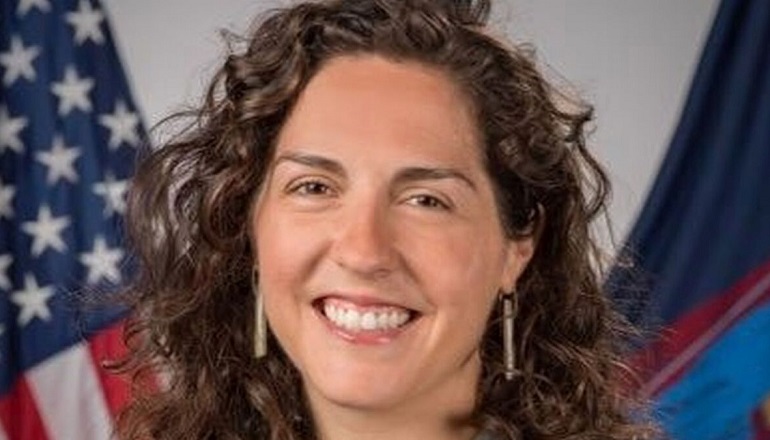
“I am excited about the opportunity for offshore wind off the West Coast and in the Pacific,” Lefton (pictured) said.
“I expect that we will move forward with offshore wind off the coast of California.”
If approved by the US state’s legislator, California will commit $20m (€16m) of its 2021-2022 budget to help the development of offshore wind.
According to trade group Offshore Wind California, the state’s governor has said offshore wind siting negotiations with the Interior Department, which houses BOEM, and the Defense Department have been progressing.
Anticipating “growing interest in developing wind energy projects offshore California,” the US Navy has drawn up an assessment of wind farm compatibility with its operations. It has identified large swaths of waters that it says either should not have wind farm operations or would be subject to site specific stipulations. There are areas that the Navy wouldn’t object to.
Floating wind projects in the deep waters off the West Coast are meanwhile part of significant potential wind generation capacity outside of the northeastern states, BloombergNEF analyst Imogen Brown told conference attendees Tuesday.
“There are certain areas where there just simply isn’t an option for fixed foundation because the water depths are too great, areas like the West Coast of the US,” Jonathan Cole, managing director with Iberdrola Renewables Offshore, told the conference.
Of floating wind potential in the United States, Cameron Smith, head of offshore at Mainstream Renewable Power, which has received full qualification to apply for a lease in California, told the conference: “California has a great role to play in this.”