


Vineyard Wind has begun marshalling activity for the first US commercial‐scale offshore wind development, at the New Bedford Marine Commerce Terminal (NBMCT), in Massachusetts.
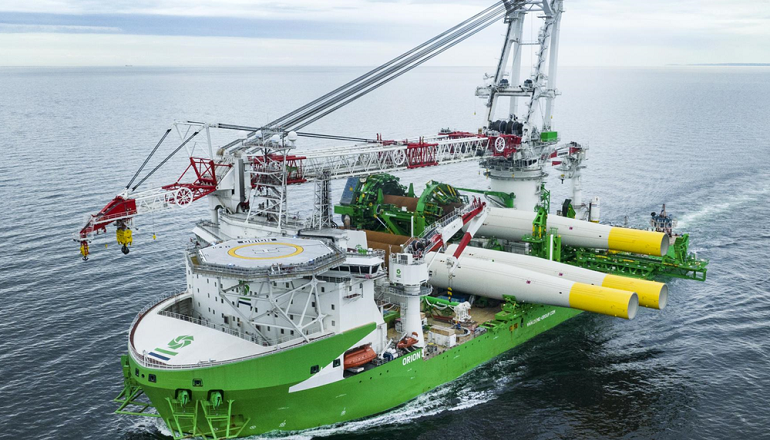
Installation activity will commence in earnest over the next few weeks and will entail the frequent arrival and departure of large heavy‐lift offshore wind (OSW) vessels and barges to deliver and deploy offshore wind tower, nacelle and blade components.
In addition to the size of the vessels, the frequency of these transits – including arrivals, departures, and in-port repositioning – will be greater than the facility has seen from large vessels.
In order to ensure safe transit of the OSW vessels and most importantly to guarantee the safety of all other traffic, particularly commercial fishermen and recreational boaters, the New Bedford Port Authority (NBPA) is taking two primary steps.
In the first instance the NBPA will continue to provide escorts to assist in the transit of large commercial vessels.
Depending on the size, timing, weather conditions or other factors, this may include multiple escorts.
The primary purpose these is to regulate/contain vessel traffic on each side of the hurricane barrier and within the harbour as ships traverse the barrier opening, and to ensure a safe transit to the turning basin in front of State Pier and the Terminal channel.
When vessels are being escorted, it will require a brief halt to all other boats through the New Bedford hurricane barrier and surrounding the ship as it traverses the harbour.
Traffic will resume as soon as the New Bedford Harbormaster determines it is safe to do so.
In the second instance the NBPA will be communicating information received from Vineyard Wind and its contractors to port users regarding the timing of any OSW transits, so that sufficient preparation, planning, or schedule adjustments can be made.
Due to a range of operational and weather factors, actual arrival can deviate by several hours and even days from the targeted arrival time.
The NBPA will attempt to reach as many commercial operators – fishing boats, commercial freight, ferries –as possible to inform them of this communications protocol.