


WindEurope has welcomed Greece’s “important step” towards developing an offshore industry after politicians approved the country’s first Offshore Wind Law last week.
The government will adopt several decrees in the coming months specifying future offshore wind zones and auction criteria, with a target of building at least 2GW by 2030.
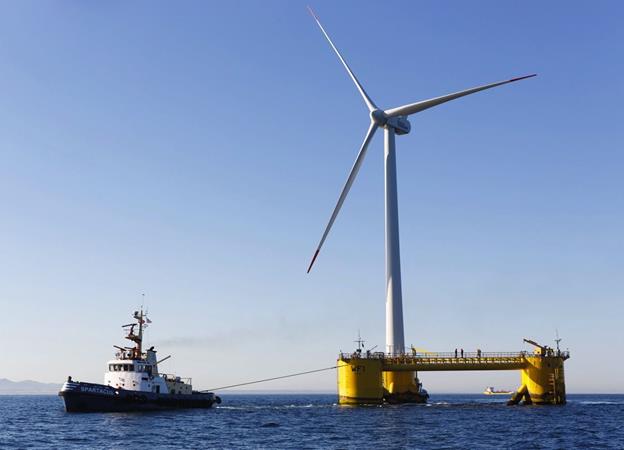
Much of this new capacity is expected to be from floating technologies, given the depth of the waters off the Greek coastline.
The new legislation appoints state-owned exploration company Hellenic Hydrocarbon Resources & Energy Resources Management to lead site investigation and allocation and concession development.
The national transmission system operator ADMIE will be responsible for providing the onshore and offshore grid infrastructure.
In the coming months, the Greek Ministry for the Environment and Energy will adopt a series of decrees, commissioning Strategic Environmental Impact Assessments to first define broader offshore wind development areas.
Exact installation zones within these areas will then be defined, as will the exact terms for offshore wind development in each installation zone.
WindEurope said: “How fast the first Greek offshore wind turbine can be commissioned will depend to a large part on the timely issuance of decrees, sufficient visibility for investors and developers as well as the definition of adequately wide offshore wind installation zones that allow for scale-effects and increase the attractiveness of each zone.”
The association added the first offshore wind auctions could take place as early as 2025-26, with a sliding feed-in-premium scheme – similar to a contracts for difference mechanism – expected to support new development.
Given the characteristics of the Greek coastline with water depths of more than 50 meters, much of the 2GW Greece aims to build by 2030 will be floating offshore wind.
“The Greek Offshore Wind Law is therefore yet another push for Europe’s floating offshore wind industry,” said WindEurope.
“Today, Europe has just over 100MW of floating wind across four projects operating in Scotland, Portugal and Norway. But the pipeline of new projects is growing and by 2030 Europe could have more than 10,000MW of floating wind.”