


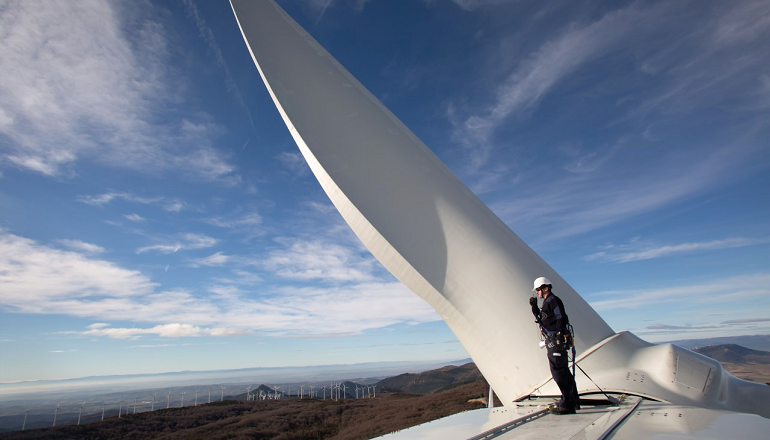
Siemens Gamesa is to supply turbines for a 59MW wind farm project in Djibouti, in east Africa.
Under the terms of the contract Siemens Gamesa will build the wind farm, which will deploy 17 of its SG 3.4-132 wind turbines on a 395-hectare site near Goubet cove in the Gulf of Tadjoura.
The wind farm will be operational in mid-2021.
The wind farm – the country’s first renewable energy plant – will almost double the current installed power generation capacity in Djibouti, all of which currently comes from fossil fuel sources.
The electricity interconnection, civil works and 10 km of internal roads and tracks will be built as part of project.
Siemens Gamesa will also maintain the wind farm, for a minimum of 10 years, with the option to renew.
The project is Siemens Gamesa’s first in Africa with the leadership and participation of an African investor.
A consortium of four entities are leading its development. They are the Africa Finance Corporation, the Dutch development bank FMO, Climate Investor One (Dutch investment funds in green energy in Africa, Asia and Latin America) and local company Great Horn Investment Holdings.
The project is covered by the World Bank’s Multilateral Investment Guarantee Agency.
The electricity generated will be sold by the consortium to Electricite de Djibouti, the national power generation company, for a period of 25 years.
AFC project development and investments vice president Osaruyi Orobosa-Ogbeide said: “We believe that this project is the beginning of a new partnership and we will be relying on Siemens Gamesa’s extensive experience in the region to deliver on the project within the stipulated timeframe.”
Despite high resource potential in Djibouti and opportunities for cross-border export, there are still 110,000 households in the country without access to power.
The new installation, part of an expanding national renewable energy development programme, will enable clean energy supply, decrease the cost of electricity and allow the country’s population of just under one million people, and its key industries, to “strengthen its electrical independence and economic development”.
Siemens Gamesa chief executive Markus Tacke said: “Access to affordable energy is key to supporting long-term sustainability and economic growth.
“Industrialisation, agricultural improvement or even the expansion of municipal water systems depend on reliable and cost-effective energy access.
“This project is another step in Siemens Gamesa’s commitment to shaping a sustainable future for Africa.”