


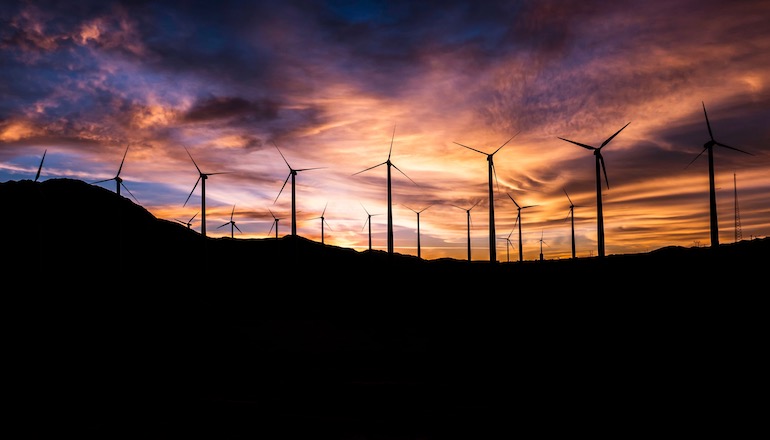
Djibouti’s first-ever wind farm, the 60MW Red Sea Power (RSP) project, has been inaugurated.
As the first significant international investment in the energy sector in Djibouti, the US$122 mill project creates the country’s first Independent Power Producer (IPP) and sets a template for further private investment.
An additional 45MW of renewable energy is already planned by the consortium of investors behind RSP.
These are infrastructure solutions provider Africa Finance Corporation (AFC) as lead developer; the Dutch entrepreneurial development bank FMO; blended finance fund manager Climate Fund Managers (CFM); and Great Horn Investment Holding (GHIH), an investment firm owned by a unit of the Djibouti Ports & Free Zones Authority and Djibouti Sovereign Fund.
Until now Djibouti has been entirely reliant on power generated from imported fossil fuels, as well as hydrogen generated power imported from neighbouring Ethiopia.
Less than half of the 123MW of domestic installed capacity is operational due to outdated diesel plants.
Critically for the East African nation, the new clean energy will spur industrialisation, job creation and economic stability as Djibouti seeks to take advantage of its strategic location as a global transshipment hub.
With its extensive coastline and dedicated port facilities positioned strategically along the Red Sea and the Gulf of Aden, Djibouti could play a central role in the global energy market.
The country has enough wind, solar and geothermal resources to triple existing capacity to at least 300MW.
It also has one of the world’s highest concentrations of foreign military bases due to its location at the entrance to the Bab el-Mandab strait, the passageway for 30% of global trade.
Djibouti’s new wind farm provides an opportunity for these bases and other enterprises currently outside the grid to decarbonize and replace their mostly diesel-generated power with clean energy.
The site’s 17 Siemens turbines each produce 3.4MW and the electricity generated is to be sold under a PPA with Electricité de Djibouti (EDD), the national state-owned utility.
Using the project as a template for future IPPs, the Government of Djibouti is already working on several other plants for additional geothermal and solar capacity.
Francois Maze, chief executive of Red Sea Power, said: “Access to electricity is vital for business growth, job creation, education, healthcare, social services, and infrastructure.
“In a country currently served entirely by fossil fuels and electricity imports, large-scale renewable energy solutions are urgently needed to mitigate and increase resilience to climate change.
“Today’s inauguration is an important milestone in Djibouti’s aim to be entirely served by renewable energy sources by 2035.
“We are proud to be part of that journey and thank all of our partners for their support over the last five years to turn our ambition into a reality.”
In addition to the new wind farm, the Red Sea Power partners have built a solar-powered desalination plant that was also inaugurated yesterday.
The plant will provide drinking water to villages near the farm.