


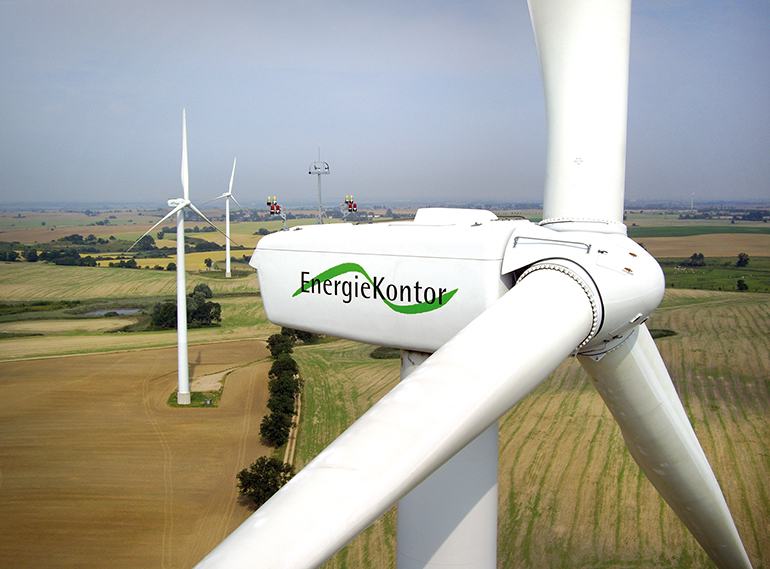
Energiekontor has agreed the turnkey sale of the Haberloh and Heidkrug wind parks in Lower Saxony to Austria’s illwerke vkw with a total nominal capacity of around 93MW.
The deal was concluded before the end of 2025 and marked the developer’s seventh sale of the year, said the company.
Illwerke vkw will expand its Völkersen site to about 104MW once the two new parks are commissioned, added the buyer.
The projects will feature 13 Vestas V162-7.2 turbines with hub heights of about 169 metres and a rotor diameter of 162 metres.
Average annual output from the first full year of operation is expected to be around 220GWh.
The parks benefit from an EEG feed-in tariff awarded in the May 2025 tender.
Turnkey handover is planned for the end of 2027.
Energiekontor chief executive Peter Szabo said: “The conclusion of the purchase agreements for the two wind parks marks a successful operational end to the 2025 financial year, with a total of seven sales and 14 financial closes. The turnkey handover of the Haberloh and Heidkrug wind parks, which is planned for the end of 2027, will create another reliable earnings base for the coming years, in addition to our own electricity generation. We are also very pleased to be continuing our established cooperation with illwerke vkw and to be jointly developing the Völkersen wind park site – a strong sign of the quality of our projects and the trust that long-term partners have in Energiekontor.”
Illwerke vkw management board member Gerd Wegeler added: “By acquiring the Haberloh and Heidkrug wind parks, we are continuing to move forward on our path towards a renewable energy future. Increasing our wind energy generation capacity is a key part of our corporate strategy. We are delighted to be taking another important step forward together with Energiekontor and expanding our portfolio strategically. This successful cooperation demonstrates how valuable strong partnerships are in achieving our ambitious expansion goals: by 2040, we want to increase our electricity production from wind power and photovoltaics to 1,000 gigawatt hours.”