


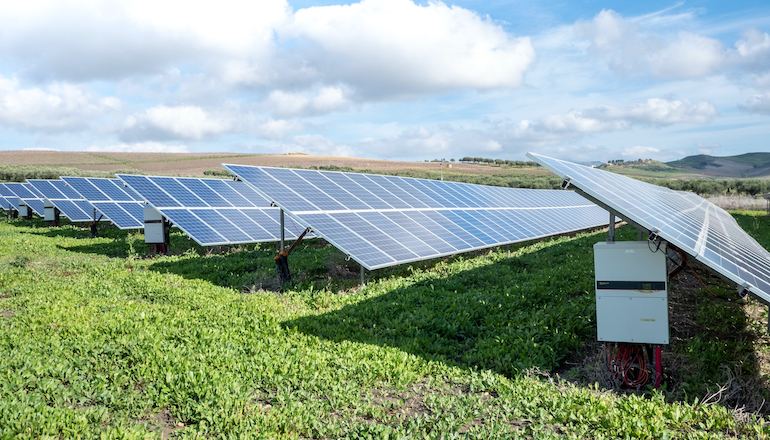
Balance Power has launched a new brand that will offer businesses a range of clean energy options, including solar and green hydrogen, to decarbonise operations.
Net Zero Power aims to deliver flexible and bespoke energy generation for large energy users at the lowest cost that work for the unique requirements of each business, Balance Power stated.
Net Zero Power focuses on working with businesses to reduce costs and reach net zero targets through clean, on-site energy generation, feeding power directly to them.
It draws on Balance Power’s experience in delivering “robust grid-scale projects with strong commercial returns”.
Net Zero Power’s offering will include an assessment to determine the optimum energy solution tailored to individual business needs, such as rooftop solar, ground-mounted solar, battery energy storage system (BESS) or green hydrogen.
In cases where an onsite solution cannot be achieved, Net Zero Power will work with landowners willing to host clean energy projects close to high-energy consuming businesses.
This will provide further benefits to wider communities through diversifying income streams for landowners, reducing surrounding pollution levels and helping businesses stay competitive by lowering costs.
The launch follows Balance Power’s announcement of a partnership with TagEnergy in October 2023, to build, own and operate 500MW of energy developments.
Phil Thompson, CEO of Balance Power and Net Zero Power, said: “For years we have been developing projects that have made a meaningful impact on providing low-cost energy to the grid and decarbonising energy supplies.
“However, once this power is in the grid many additional charges are passed to businesses.
“It has long been our goal that the energy we generate can be consumed directly by local businesses, thus significantly reducing costs.
“As companies come under increasing pressure to reach net zero and strive for ways to create a competitive edge, we can now help them reach their goals while continuing to work with landowners, communities and local authorities to fundamentally shift how the UK produces and uses power.”