


New installed renewables capacity will drop 13% this year to 167GW as a result of the Covid-19 pandemic, according to the International Energy Agency (IEA).
The IEA’s ‘Renewable Market Update’ report, which was released today, said the projected decline reflects possible delays in construction activity due to supply chain disruptions, lockdown measures and social distancing guidelines, as well as emerging financing challenges.
But, the report said, overall global renewable power capacity will grow by 6% in 2020.
IEA added that growth in new capacity is expected to resume in 2021 as most of the delayed projects come online and “assuming a continuation of supportive government policies”.
Additions next year will rebound to the level reached in 2019, with significant support coming from the partial commissioning of two mega hydropower projects in China, it said.
However, combined growth for 2020 and 2021 will be 10% lower than the IEA had previously forecast before the coronavirus outbreak.
Almost all mature markets are affected by downward revisions, except the US where investors are rushing to finish projects before tax credits expire.
Europe’s new additions are set to fall by one-third in 2020, the largest annual decline since 1996. A partial recovery is expected next year, IEA said.
Solar accounts for more than half of the forecast expansion in renewable power in 2020 and 2021, but additions decline to over 90GW in 2020 from 110GW in 2019.
Large-scale PV projects are expected to rebound in 2021, but overall installations are unlikely to surpass 2019 levels, IEA said.
“This is because of a significantly slower recovery of distributed solar PV as households and small businesses review investment plans,” the agency added.
Commissioning delays caused by the Covid-19 crisis have slowed the pace of onshore wind installations this year, but they should be mostly compensated for in 2021, as the majority of projects in the pipeline are already financed and under construction, the report said.
“However, uncertainty remains over projects that had planned to secure their financing this year and become operational next year,” it added.
The impact of the crisis on offshore wind deployment is set to remain limited in 2020 and 2021, because projects have longer construction periods than onshore ones.
IEA said renewables had already been facing challenges at the start of the year in several markets in terms of financing, policy uncertainty and grid integration, with Covid-19 now “intensifying those concerns”.
The agency said governments have the opportunity to reverse the trend by making investment in renewables a key part of stimulus packages designed to reinvigorate their economies.
“The priority should be on sectors that offer early opportunities to create jobs and economic activity while developing more efficient and resilient energy systems and reducing emissions,” the report said.
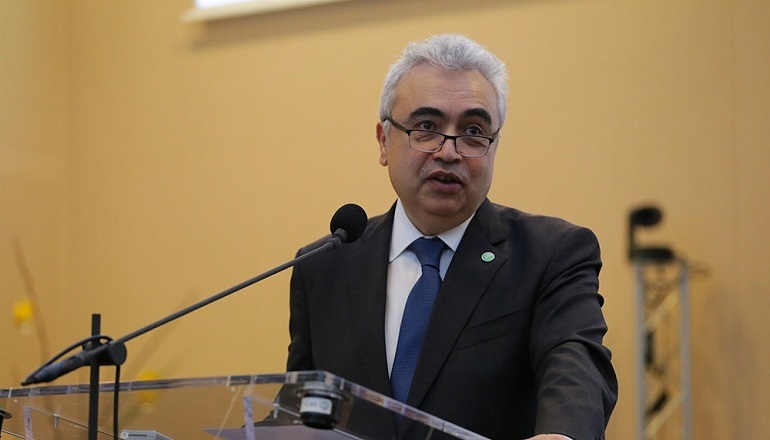
IEA executive director Fatih Birol (pictured) said: “The resilience of renewable electricity to the impacts of the Covid-19 crisis is good news but cannot be taken for granted.
“Countries are continuing to build new wind turbines and solar plants, but at a much slower pace.
“Even before the Covid-19 pandemic struck, the world needed to significantly accelerate the deployment of renewables to have a chance of meeting its energy and climate goals.
“Amid today’s extraordinary health and economic challenges, governments must not lose sight of the essential task of stepping up clean energy transitions to enable us to emerge from the crisis on a secure and sustainable path.
“The spectacular growth and cost reductions of renewables over the past two decades have been a big success story for global energy markets, driven by innovation in both technology and policies.
“But continuing cost declines will not be enough to protect renewables from a range of uncertainties that are being exacerbated by Covid-19.
“This underlines the critical importance of getting stimulus packages and policy strategies right in order to ensure investor confidence in the months and years ahead.”