


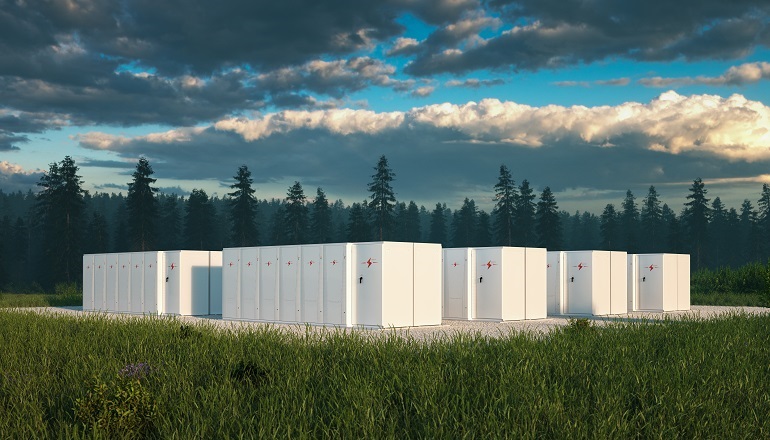
GCube Insurance has launched a new consortium to provide battery energy storage system (BESS) developers and asset owners with up to $100m of “A-rated” insurance capacity.
The consortium is comprised of six Lloyd’s syndicates and was launched in response to increasing global demand from brokers and the BESS market.
As larger utility-scale BESS assets start to come online with capacities of 100MW upwards and durations reaching up to four hours, project values – and financial risks – have increased proportionally.
Given the fast pace of technological evolution in the sector to date, there remains a shortage of long-term data to inform risk management strategies and build the confidence of underwriters in this new and emerging technology.
According to GCube’s “Batteries not Excluded” report articulates, more than 50% of reported BESS failures have occurred within the initial two years of operation.
The launch of GCube’s consortium illustrates growing recognition among underwriters that the BESS market is taking action to manage its risks.
Fraser McLachlan, Founder & CEO, GCube Insurance, said: “We have been studying developments in BESS and patiently increasing our capacity over the last 12 years.
“Our BESS consortium now formalises our significant commitment to the sector.
“BESS has reached a point of maturity where more and more capacity is required, but the complexity of mitigating losses with evolving technology also requires this capacity to be well-versed in handling claims and selecting risks.
“This is the basis for GCube expanding its presence in the sector.”
GCube’s arrangement with capital providers in the Lloyd’s market makes “full follow” capacity accessible to brokers from all its offices in Europe, in the United States, and in Australia.
McLachlan added: “These projects are now growing in size and value, and we are pleased to be in a position to provide additional coverage, as well as to guide the development of sustainable terms and conditions based on our extensive experience in the market.
“This experience has been testing, having handled some of the largest losses the market has seen, but it has been necessary for galvanising a transparent approach that offers insureds the best support available for their projects.
“BESS is already proving itself to be an integral part of the global transition to renewable energy – and it is our job to ensure that it is an asset the industry can confidently rely on to meet its objectives.”