


Reforming the British electricity market so that wholesale prices reflect local supply and demand conditions could spur investment in renewable generation to deliver a net zero energy system, according to a new report.
Energy Systems Catapult’s study, titled International Learnings on Investment Support for Clean Electricity, sets out the results of a study commissioned by Octopus Energy.
The study was conducted to inform the ongoing debate around the Review of Electricity Market Arrangements (REMA) consultation being carried out by the Department for Business, Energy, and Industrial Strategy (BEIS), and related work on market reforms to facilitate the transition to a net zero power grid by 2035.
Analysing evidence from markets across the US and in New Zealand, where Locational Marginal Pricing (LMP) is commonplace, and European markets that use zonal pricing mechanisms, the study aims to better understand what Britain could learn from international markets that use locational price signals to inform a market design that supports investments in renewable generation and in flexibility.
The report observed that markets that have adopted an LMP approach have also adopted complementary policies to support investment in renewables, like clean energy standards on suppliers and tax credits for investment in renewables.
The combination of LMP and these “demand pull” policies was able to support high levels of investment in renewables.
For example, since introducing LMP in 2009, California has added 3.5GW of wind capacity and 14GW of solar PV to its network – taking their cumulative share of generation capacity to 25%.
No conclusive evidence was found by the study that sharper price signals in LMP markets increased the cost of capital for generators, despite some commentators making that link.
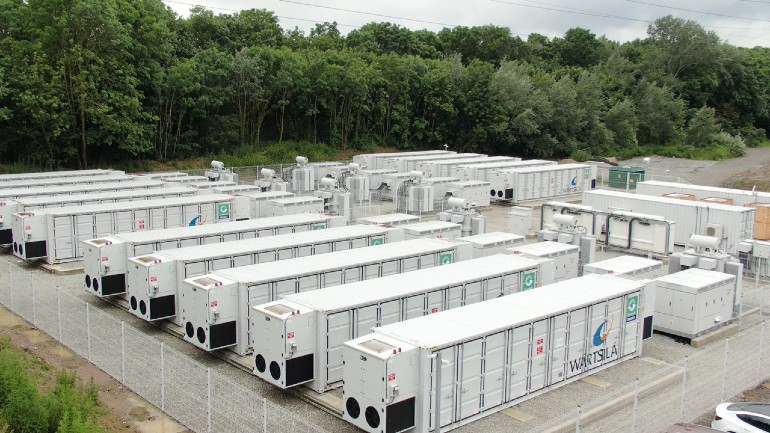
A link was observed by the report between the use of LMP and the provision of storage, with storage being disproportionately located in LMP markets operated by Independent System Operators (ISOs) and Regional Transmission Organisations (RTOs) in the US.
Despite only making up 58% of grid capacity in the US, LMP markets account for 74% of large-scale battery storage power capacity (GW) and 72% of energy capacity (GWh).
The report noted emerging evidence of intermittent renewables behaving more like price-responsive assets in LMP markets by contracting with or co-locating with storage.
Key findings from the International Learnings on Investment Support for Clean Electricity report found that LMP is not an obstacle to large-scale investment in renewable generation.
It also found that the impact of LMP can be enhanced when combined with complementary policies to create a “demand pull” for clean energy investments.
The British electricity market could benefit from a different technology mix that would emerge under LMP markets.
Ben Shafran, Head of Markets, Policy & Regulation at Energy Systems Catapult, said:
“Our analysis of other national electricity markets has helped us to make several general observations that can apply to the current debate around the Review of Electricity Market Arrangements (REMA).
“The most significant finding of the report is that Locational Marginal Pricing (LMP) can be the foundation to a Net Zero electricity system, and can be enhanced if coupled with policies that create a “demand pull” for clean energy investments.
“The perceived conflict between market designs that support investments in renewable generation and those that support investments in flexibility can be overcome; they do not need to be mutually exclusive … both can be successfully accommodated by learning from international experience.”
Rachel Fletcher, Director for Regulation and Economics at Octopus Energy, added: “Current electricity market arrangements have been highly successful in encouraging renewable investment in Britain but a single GB market price is holding back the case for batteries, demand response and smart EV charging.
“With BEIS reviewing the electricity market design, this report shows we do not need to choose between arrangements that work for renewables or for flexibility.”