


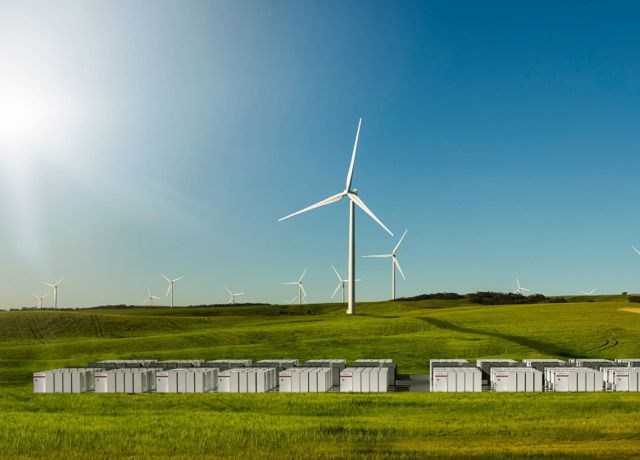
Australia is forecast to double its installed energy storage capacity in 2020, according to analysis of the market by Wood Mackenzie.
By the end of this year the country’s installed capacity is expected to reach 1.2 gigawatt-hours (GWh), more than double the 499 megawatt-hours (MWh) installed in 2019, taking cumulative storage capacity to 2.7GWh this year.
Wood Mckenzie has predicted Australia’s cumulative energy storage investment will hit $6bn (€5.24bn) by 2025 translating to 12.9GWh of cumulative storage deployments.
The analysis found that, for the first time, front-of-the-meter (FTM) capacity will overtake behind-the-meter (BTM) capacity in 2020, a result of various federal and state funding programmes.
Wood Mackenzie senior analyst Le Xu said: “The coronavirus-led restrictions and economic downturn could cause delays or cancellations to the 4.6GWh announced projects in the pipeline over the next five years.
“South Australia, in particular, is at risk as majority of the planned deployments are located there.
“Developers with strong balance sheets are in a position to push ahead with their project developments, but still face grid connection challenges in the future.”
With the Australian Renewable Energy Agency’s advanced renewable funding phasing out, storage developers are “pressed to seek private equity to cover 10%-50% of initial project investments”, said Wood Mackenzie.
“Revenue uncertainties” and “risks of grid connection” may prevent projects from attracting funding.
The FTM market is most affected by this and is likely to contract in 2022, the study found.
FTM cumulative capacity could hit 4.2GWh by 2025, most of it from solar-plus-storage.
Xu said: “The costs of energy storage systems will decline 27% over the next five years. By 2025, the levelised cost of electricity (LCoE) of both solar-plus-storage and solar-and-wind-plus-storage are expected be cheaper than gas plants.
“In general, we can expect renewables-plus-storage costs to be about 20%-29% lower in 2025 compared to today.”
While coal will still remain Australia’s cheapest source of electricity in 2025, Xu said the switch from coal to green energy is more about “short-term pain for long-term gain”.
She said: “As Australia gradually phases out its 31GW coal fleet, it will need to look for alternatives. Project developers, both domestic and international, are clearly unfazed by the challenges.
“The number of Australian developers has doubled to 40 this year.”