


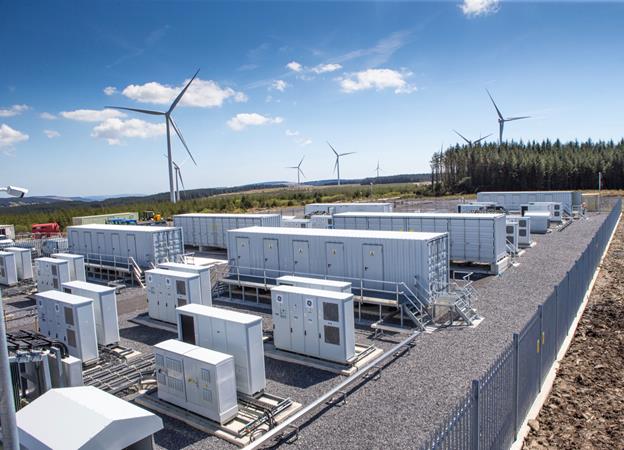
A new report by RenewableUK shows that building energy storage projects alongside onshore wind and solar farms reduces electricity system costs.
More of these so-called hybrid projects will benefit billpayers in the long term, according to the report.
These storage projects are also vital in providing flexibility in the UK’s clean energy system, stated the report, to ensure it continues to meet electricity demand at all times, especially as demand is set to grow with the take-up of technologies such as electric vehicles.
The report, entitled “Making the most of renewables: the role of onshore co-location in accelerating an integrated energy system”, sets out the case for reforming the planning system and introducing financial support mechanisms to encourage more battery storage and green hydrogen projects to “co-locate” at sites where clean electricity is generated throughout the UK.
This means they could be built on wind and solar sites which already have planning permission and share existing grid connections rather than having to wait for years in a queue, saving time and money.
The queue of all energy projects awaiting connection has now reached over 700GW according to National Grid statistics, of which 97GW consists of battery storage projects.
To put this into context, the UK’s entire operational wind capacity (onshore and offshore) currently stands at nearly 30GW.
Co-locating solar projects with battery storage could reduce the cost of building and running battery projects by 50%.
Research by the Carbon Trust, referenced by the report, suggests that enabling a more flexible energy system with storage would save the UK up to £16.7bn a year by 2050 in electricity system costs, ultimately benefitting bill payers.
RenewableUK’s EnergyPulse database shows that at present only 12% of wind and solar farms throughout the UK are co-located with batteries or hydrogen electrolysers, but the report states that has the potential to surge in the years ahead to meet the expected increase in electricity demand if the right policy framework is put in place.
The report calls for National Grid ESO to identify and quantify the value of the flexibility which co-location offers to a net zero system, as this would stimulate new investment.
The wide range of measures also include providing new streamlined guidance for planning authorities to bring forward projects, and resourcing planning bodies better to enable decisions to be taken more swiftly.
Energy parks, which combine renewables and storage, produce a more constant supply of clean electricity, which helps to tackle the issue of variability.
The report’s author, RenewableUK’s Senior Policy Analyst Yonna Vitanova, said: “The value of storage in our modern energy system is under-appreciated and under-valued.
“This has to change if we’re to make the most of innovation clean technology, drive people’s electricity bills down and increase Britain’s energy security.
“The growth of much-needed energy storage projects, co-locating alongside wind and solar farms, is currently being hindered by out-dated policies and regulations which were drawn up in a different era.
“There isn’t even a clear definition of co-location applied consistently across planning policies, grid and market arrangements – which is one of the factors hindering the speed of deployment of co-located projects.
“Renewable energy developers should be able to include co-location in their business plans more easily, with a clearer rules and regulations being put in place to unleash the benefits which co-located projects can provide to the system and ultimately to consumers.”