


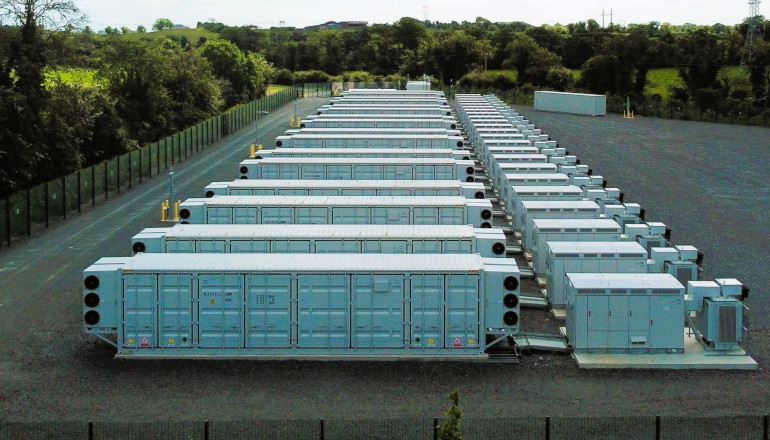
RES has signed an agreement to manage the 500MW Coalburn battery energy storage project in South Lanarkshire, Scotland.
The former coal mining site will host one of Europe’s largest battery storage systems once fully operational, according to RES.
Coalburn is being developed by Copenhagen Infrastructure Partners (CIP) in partnership with Alcemi.
The project will deliver 1GWh of storage capacity, helping to balance the grid when demand is high or renewable output is low.
RES will provide asset management services for the project, ensuring the site runs efficiently and delivers long-term value.
Ian Hunter, global head of asset management at RES, said: “Coalburn is a significant step forward for grid-scale storage in the UK and we’re proud to be supporting its long-term operation.
“As electricity demand increases and renewable generation continues to grow from wind and solar, battery projects are essential to balance the system and maximise the value of clean energy.”
Construction of the first 500MW phase began in late 2023, with Coalburn 1 expected online later this year.
A second 500MW phase, Coalburn 2, is scheduled for 2027.
CIP’s Commercial Director Malcolm Paterson said: “CIP’s latest investments in Scottish battery energy storage will increase our BESS portfolio in the UK to a capacity of 1.5GW.
“This supports the UK’s pursuit of a clean power system by 2030 and the goal of delivering a net zero carbon economy by 2050.
“We welcome the partnership with RES in operating our Coalburn BESS sites, which stand to enhance energy security and provide the grid with much-needed flexibility.”
Coalburn is one of the largest battery projects in RES’ global services portfolio, which spans more than 43GW of wind, solar, storage and green hydrogen across 1,300 sites.
RES operates global control centres that monitor assets in real time, including a facility in Glasgow.
The company said large-scale storage like Coalburn is essential for a secure electricity system as more of the UK’s power comes from variable renewables.
It has also called for faster grid upgrades and a planning system that can keep pace with clean energy infrastructure rollout.