


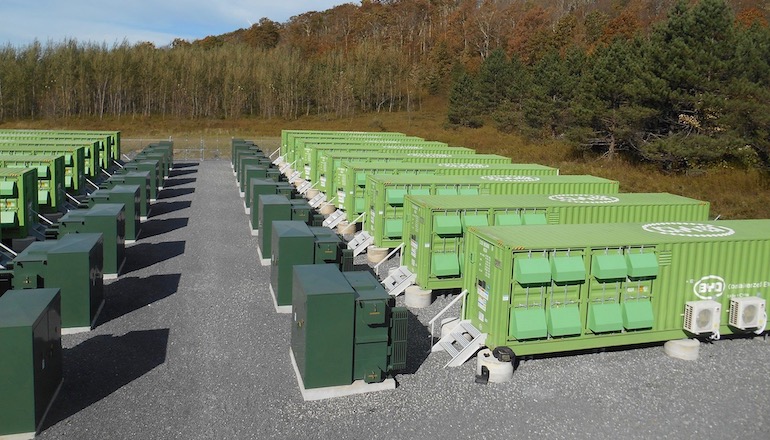
French public electricity transmission system operator RTE is partnering with Nidec Industrial Solutions on an energy storage project called Ringo to test the automatic management of surplus renewable electricity.
The 12MW battery project is located in Vingeanne-Jalancourt in the Cote-d’Or region, an area with high wind energy production.
Work started in January 2020, and now the system has been put into service, meeting the expected delivery times, despite the difficulties encountered due to the pandemic, the partners said.
The pilot will last three years, which give the time needed to learn how to manage renewable energy, the companies added.
Nidec Industrial Solutions has supplied its power electronics converters and management control system that make it possible to convert stored energy into electricity and use it to feed into the grid.
The Ringo system makes it possible to store surplus renewable energy during peaks in production and return the stored energy to the grid as and when needed.
This prevents having to build new electric lines and the loss of electricity produced from renewable sources, the partners said.
The project has been approved by the French Commission de Regulation de l’Energie (Energy Regulatory Commission) for a total investment of €80m.
Nidec Industrial Solutions chairman Dominique Llonch said: “The experiment we have launched today with RTE is a fundamental step towards achieving a zero-emissions society by 2050, a goal Europe is committed to reaching.
“To achieve this, more electricity will have to be produced which is why it will be necessary to improve energy management by modulating production and consumption.
“Ringo will allow us to acquire the knowledge and experience needed to overcome this challenge.
“We are proud that RTE has chosen us as a partner in this highly innovative project.
“A collaboration that confirms our world leadership in renewable energy battery storage systems, which incorporate advanced technologies and solutions, offered at the best price and able to guarantee reduced execution times.”