


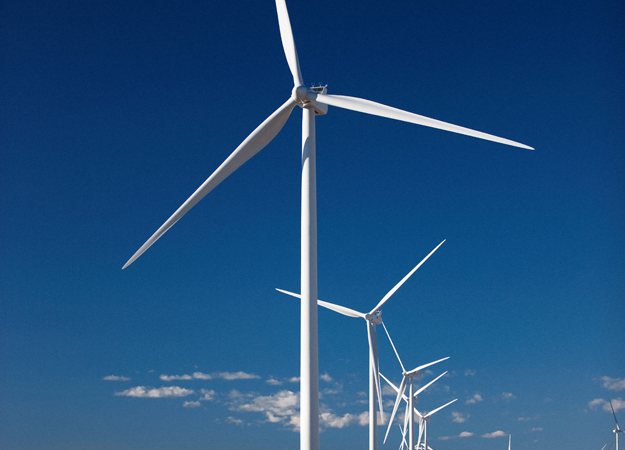
New data produced by the US Federal Energy Regulatory Commission (FERC) within the past month has revised upwards wind and solar forecasts, over the next three years.
FERC’s latest monthly “Energy Infrastructure Update” report, with data through 31 May 2019, forecasts wind capacity to grow by 26.9GW and utility-scale solar by 16.3GW by June 2022.
Hydropower is also expected to increase by 1.4GW, biomass by 328MW, and geothermal by 280MW.
In total the regulator forecasts nearly 5GW of additional renewables capacity to 2022, on top of its previous forecast of 41GW.
Over the forecast period, natural gas generating capacity is projected to increase by 18GW, but will be almost completely offset by a drop of 17GW in coal’s net generating capacity and a decline of 1GW in oil’s net generating capacity.
Nuclear power is also expected to drop by 7GW.
The SUN DAY Campaign reviewed the FERC data.
“While earlier FERC data had documented this general trend, the latest numbers are particularly noteworthy because they reflect dramatic changes in FERC’s projections in just a few weeks’ time,” stated the SUN DAY Campaign.
FERC’s most recent forecast for net new generating capacity by wind is 1.8GW higher than that forecast only a month earlier while that for utility-scale solar has grown by 1.5GW.
If FERC’s latest data proves accurate, in three years, coal’s share of the nation’s total available installed generating capacity will drop from 21.54% today to 19.49%, found the SUN DAY Campaign.
Meanwhile, renewable energy sources would provide roughly one-quarter of the nation’s total available installed generating capacity by June 2022 with wind alone accounting for over10.17%) and utility-scale solar 4.46%.
SUN DAY Campaign executive director Ken Bossong said: “The revisions in FERC’s latest three-year projections underscore the dramatic changes taking place in the nation’s electrical generating mix.
“Renewable energy sources are rapidly displacing uneconomic and environmentally dangerous fossil fuels and nuclear power, even faster than FERC had anticipated only a month ago.”