


A strong performance in offshore wind drove earnings at Orsted up for the first six months of the year, despite impairments due to project delays and cancellations.
The Danish developer said EBITDA for the period was Dkr14.1bn (€1.9bn), compared to Dkr10.2bn in the year-ago period.
This was driven by a strong quarter two performance of Dkr6.6bn, compared to €3.3bn in 2023, a 98% uptick.
EBITDA excluding new partnerships and cancellation fees in H1 2024 amounted to Dkr12.8bn, which is an underlying increase of 25 % compared to last year.
Earnings from offshore sites amounted to Dkr11.3bn, which was an increase of Dkr2.3bn compared to the same period last year.
The increase was driven by the ramp-up of generation at our offshore wind farms Greater Changhua 1 and 2a, South Fork, and Gode Wind 3, higher wind speeds, higher prices on the inflation-indexed CfDs, and green certificates, the company said.
Orsted has increased its earnings expectations from offshore as a result.
However, impairment losses had a negative effect in H1 2024 of Dkr3.2bn, mainly driven by a decision to cease execution of e-methanol project FlagshipONE, a construction delay related to the onshore substation for Revolution Wind, an update of our fair value measurement related to the Ocean Wind seabeds and an increase in the US long-dated interest rate.
This contributed to an overall loss for the quarter but the half-year numbers show the company still in the black.
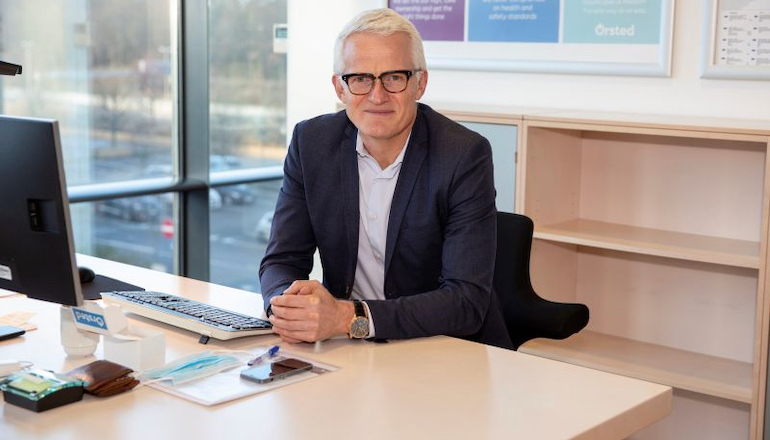
Chief executive Mads Nipper said: “I am pleased with our results. Ørsted’s operations are performing well, and particularly the earnings from our offshore wind farms, and thus our core business, have increased. Therefore, we maintain our EBITDA guidance for the full year, and we increase our earnings expectations for our offshore wind business.
“In the first half of the year, we have executed on the updated business plan that we presented in February, and we have put almost 2 GW of renewable energy capacity into operation, providing renewable energy to more than 1.5 million households across three continents. This is a significant contribution to Ørsted’s long-term renewable capacity goals.”