


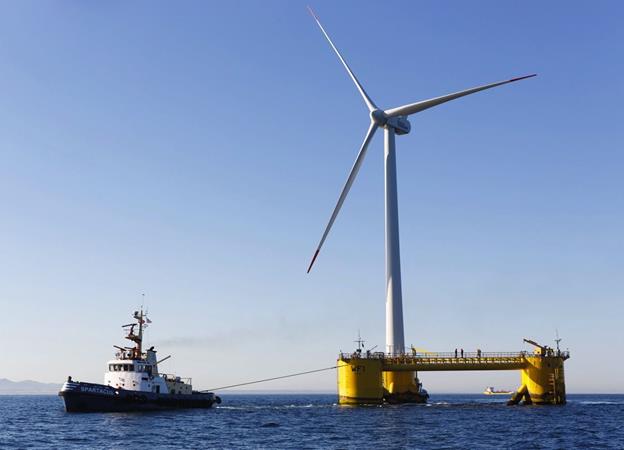
The UK Infrastructure Bank has confirmed new renewable technologies such as floating wind and tidal stream projects will be among its investment targets in its first strategic plan unveiled today.
The Bank has said clean energy will be the largest beneficiary of the £22bn it aims to deploy, of which £8bn will be debt and equity, £10bn will be guarantees and £4bn will go towards local authority lending.
It will look to invest in “low carbon” hydrogen, storage, interconnection and carbon capture, as well as bring down the cost and increase scale of new renewable power generation, citing floating wind as an example.
The report notes: “The government’s fourth CfD allocation round includes a £75m pot for new renewable technologies – of which £24m and £20m is ringfenced for floating offshore wind and tidal stream projects respectively.
“We expect the technology risk associated with first of a kind projects to be a barrier to investment despite the CfD model being well-established. The scale and pace of government ambition may also lead to financing gaps. We will look to finance the development of the market, reducing the cost of capital over time.
“We are open to financing other emerging technologies supported in the fourth and fifth CfD allocation rounds.”
The fund is also looking to support subsidy-free wind and solar parks that do not have CfDs, and respond to “any emerging private finance capacity gaps in offshore wind and solar projects with a CfD”.
It will invest in solar and wind projects presented by “experienced” local authorities “where there is a compelling business case.”
Since launching in June last year, the government-backed UK Infrastructure Bank has completed seven deals worth £610m.
In October last year, it committed a £107m loan to the Tees Valley Combined Authority to support development of the South Bank Quay development at Teesworks.
The site will include SeAH’s planned monopile factory, where foundations will be loaded out and shipped to the Dogger Bank offshore wind project.
The Bank is also backing two subsidy-free solar farms managed by NextEnergy Capital in the UK, totalling 115MW.
A recruitment campaign is underway, with the Bank expected to hire for 80 roles in the next six month across banking, legal risk, corporate and local authority functions.
Economic Secretary to the Treasury, John Glen said: “A year after its launch, it’s great to see the bank delivering on its mandate to accelerate investment in infrastructure, helping to level up across the UK and tackle climate change.”