


ScottishPower Renewables has reported a rise in earnings to £250m (€296m) in Q1 2022 thanks to windier weather conditions across the UK.
EBITDA rose 19.5% year-on-year to £41m, due to increased production as a result of good weather conditions (£16m) and higher energy prices.
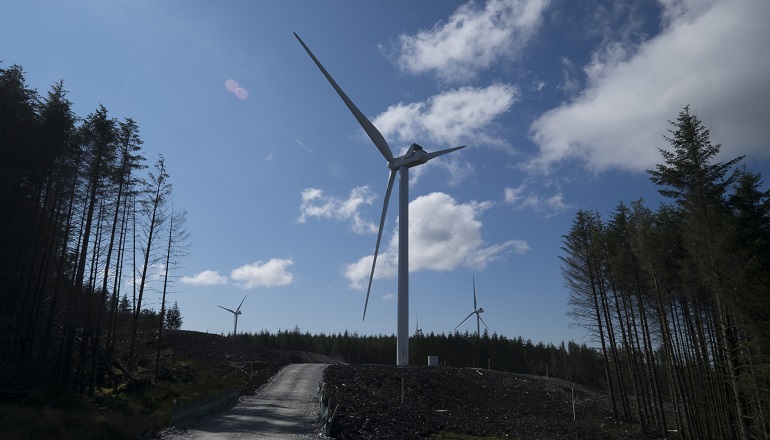
Onshore wind production increased 43% on the first three months of 2021 due to windier weather conditions across the UK.
During Q1, planning consent was granted for the 2900MW East Anglia Hub which will see two new offshore wind farms, East Anglia One North and East Anglia Two, built 37km off the coast at Lowestoft.
There was also Scotwind auction success with seabed rights awarded for three offshore projects with total capacity of 7GW.
These comprised two large-scale floating projects in partnership with Shell and one solo fixed project, trebling ScottishPower’s offshore wind pipeline to more than 10GW.
It also received provisional approval by Ofgem for the construction of the 2GW power transmission line linking Scotland and the northeast of England, which is expected to come into service in 2027.
ScottishPower chief executive Keith Anderson said: “Decarbonisation and delivering green energy security have never been more important as we see record global gas prices impacting on every home and business in the UK.
“ScottishPower has the clean, green assets and pipelines to deliver on the Government’s long-term ambition and much welcomed energy strategy set out earlier this month.
“Our first quarter has seen onshore wind generation increase by over 40% demonstrating the huge role it has to play in delivering for the GB energy market going forward, coupled with offshore wind and our planned investments in new technologies like green hydrogen and battery storage.
“However, UK households are facing a cost of living crisis that is unprecedented and is only set to get worse with energy prices likely to rise further in October.
“The scale of this issue is too big for one industry to deal with and that’s why we believe we need a new approach which could see Government reducing bills by £1,000 for the most vulnerable with a targeted fund and costs only recouped once prices return to normal and over a longer period of time.
“Government, consumer groups and industry are unanimous in the view that something needs to be done to soften the blow for consumers – it’s time to think out of the box on the solution to support those most in need.”