


Vattenfall’s operating profit fell sharply in 2025 as lower electricity prices in northern Sweden weighed on results and offset stronger hedging performance and higher nuclear output, according to the company’s year-end report.
The utility posted EBIT of €2.6bn for the year, down from €3.7bn in 2024. Vattenfall said the decline was driven in part by “very low prices in the north” of the Nordics as a strong hydrological balance pushed down spot power prices.
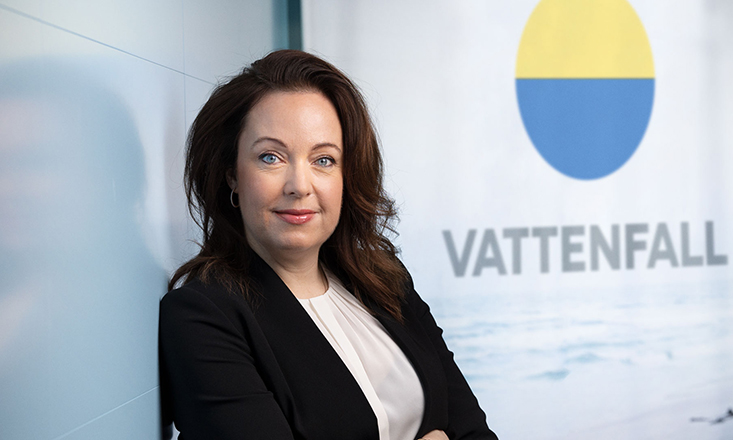
Chief executive Anna Borg (pictured) said electricity prices in the region “were at low levels due to a strong hydrological balance”, which had a negative impact on results despite higher average prices in southern Sweden, Denmark and continental Europe.
Underlying EBIT, however, improved to €2.9bn (€1.6bn) thanks to stronger hedging on the continent and increased contributions from nuclear generation, the company stated.
Electricity generation rose to 102.1TWh (99.6TWh), supported by higher hydro and nuclear output, while wind production remained broadly stable at 17.3TWh. Vattenfall reported turbine availability of 93.5% offshore and 95.8% onshore.
Borg said: “The underlying operating profit for the full year 2025 increased… primarily driven by an improved development of price hedging in Vattenfall’s continental markets and a higher contribution from nuclear operations.”
She added: “Lower contributions from hydro power in the Nordics and from the sales operations had a partially offsetting effect.”
The CEO also emphasised Vattenfall’s continued shift toward clean power, noting a planned investment programme for 2026–2030, with 56% earmarked for growth projects including the Nordlicht I and II offshore wind farms in Germany and Zeevonk in the Netherlands.
“In 2025, we invested more than ever in strengthening and extending the Swedish electricity grid,” Borg stated, adding that the company will continue its “journey towards fossil freedom” through profitable investments and closer collaboration with customers and partners.