


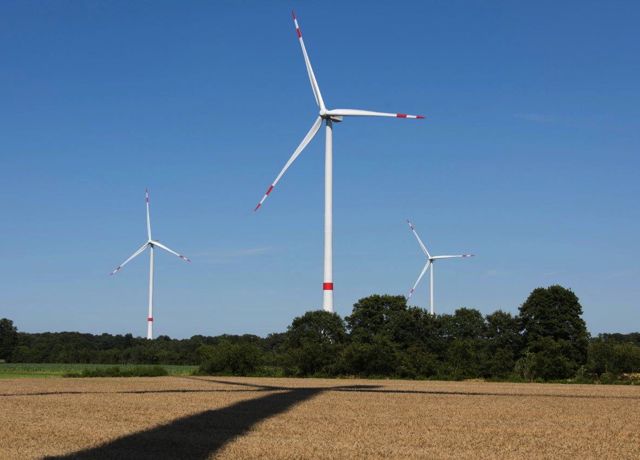
In 2018 Germany’s renewable energy output accounted for 40% of the country’s electricity generation, a new record, according to analysis by Fraunhofer Institute for Solar Energy Systems (ISE).
In total, renewable energy sources, including solar, wind, biomass and hydropower, produced around 219 terawatt hours in 2018, up 4.3% on 2017.
Solar saw the largest increase growing its share by 16%. Wind grew its share by 5.4%.
Electricity output from coal, gas and hydropower declined during last year.
Collectively solar, onshore and offshore wind produced 157 terawatt hours in 2018, beating lignite, hard coal and nuclear energy, according to the study.
According to Fraunhofer ISE’s findings, in 2018 photovoltaic systems, comprising rooftop and ground-mounted, supplied 45.7 terawatt hours to Germany’s grid.
The country added 3.2GW of solar capacity last year, increased total installed capacity to 45.5GW.
According to Fraunhofer ISE, the maximum amount of solar exported to the grid occurred on 2 July 2018, accounting for 39% of total power generation. Between April and August 2018, monthly power generation of Germany’s solar capacity exceeded output from coal-fired power plants.
The research found that wind energy produced about 111 terawatt hours in 2018, making it the second largest source of energy after lignite.
During 10 months in 2018, wind power production exceeded the output of hard coal and nuclear power.
Maximum wind-generated power reached 45.9GW on 8 December, according to the study.
The share of onshore wind was 87.4 terawatt hours. Offshore wind output increased from 17.4 terawatt hours in 2017 to over 18.8 terawatt hours in 2018. Most was generated by wind farms in the North Sea.
Due to the extremely dry summer, hydropower contributed 17 terawatt hours to power generation, the second lowest level in the last 30 years.
At around 44.8 terawatt hours, biomass was at the same level as 2017, according to Fraunhofer ISE’s analysis.