


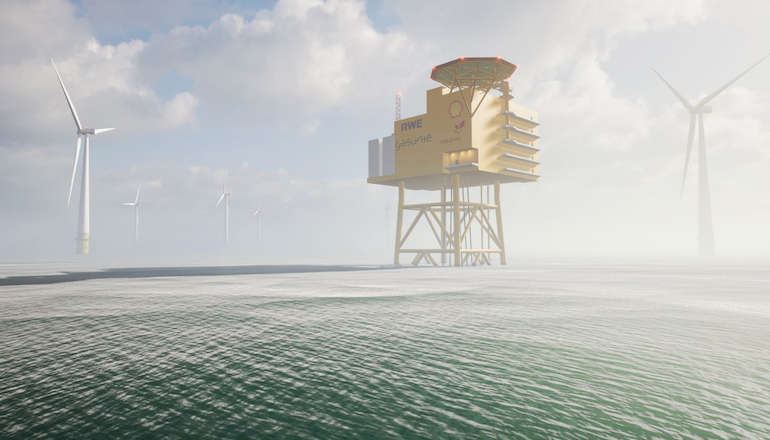
Integrating offshore wind farms with electrolysers could reduce energy system costs and enable the economic production of green hydrogen in the North Sea, according to a new study commissioned by AquaVentus.
The analysis by Frontier Economics found that coupling offshore hydrogen production with hybrid connection concepts-combining power cables and hydrogen pipelines-delivers the lowest system and grid integration costs in all scenarios examined.
Across two deployment cases, the study claims annual savings of €1.7bn with 70GW of offshore wind and €0.5bn with 55GW, driven by reduced curtailment losses and more efficient grid use.
AquaVentus chair Jörg Singer said: “The study clearly shows that the real cost drivers for hydrogen deployment lie in regulation. Germany has few natural resources – hydrogen not only strengthens our energy security but also our innovative and industrial capabilities.”
The report argues that offshore electrolysis could boost system efficiency by about 13% while enhancing project profitability through flexible production of electricity or hydrogen depending on market conditions.
AquaVentus said expanding offshore electrolysis in Germany’s Exclusive Economic Zone would improve energy resilience and reduce dependence on imports, while consistent sector coupling could deliver competitive hydrogen prices.
To unlock this potential, the study urges policymakers to amend the Wind Energy at Sea Act to allow hybrid connection concepts, noting that Germany is currently the only North Sea country prohibiting them by law.
Managing director Robert Seehawer said: “We need to cut bureaucracy to unleash innovation. The study shows that this is economic promotion at virtually no cost.”
AquaVentus represents over 100 organisations working to deploy 10GW of offshore hydrogen production capacity in the North Sea and produce one million tonnes of green hydrogen annually.