


The global offshore oil and gas (O&G) sector is “well placed” to scale up some technologies crucial for clean energy transitions, according to the International Energy Agency (IEA).
Released ahead of the COP28 climate summit in Dubai, the IEA’s Oil and Gas Industry in Net Zero Transitions special report sets out what the global O&G sector would need to do to align its operations with the goals of the Paris Agreement.
It analyses the implications and opportunities for the industry that would arise from stronger international efforts to reach energy and climate targets.
The IEA’s report highlights some 30% of the energy consumed in 2050 in a decarbonised energy system comes from technologies that could benefit from the industry’s skills and resources – including hydrogen, carbon capture, offshore wind and liquid biofuels.
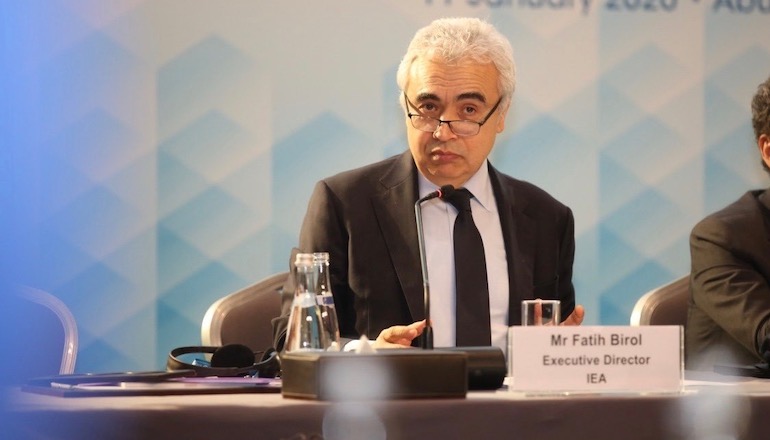
IEA executive director Fatih Birol (pictured) said: “Clean energy progress will continue with or without oil and gas producers.
“However, the journey to net zero emissions will be more costly, and harder to navigate, if the sector is not on board.”
A step-change in how the sector allocates its financial resources in order to ramp up investments in technologies like offshore wind and hydrogen.
While the oil and gas industry invested around $20bn in clean energy in 2022, or roughly 2.5% of its total capital spending the report finds that producers looking to align with the aims of the Paris Agreement would need to put 50% of their capital expenditures towards clean energy projects by 2030, on top of the investment required to reduce emissions from their own operations.
The report also noted carbon capture, “currently the linchpin of many firms’ transition strategies”, cannot be used to maintain the status quo.
If oil and natural gas consumption were to evolve as projected under today’s policy settings, limiting the temperature rise to 1.5°C would require an “entirely inconceivable” 32 billion tonnes of carbon captured for utilisation or storage by 2050, including 23 billion tonnes via direct air capture.
The amount of electricity needed to power these technologies would be greater than the entire world’s electricity demand today, stated the report.
Birol said: “Oil and gas producers around the world need to make profound decisions about their future place in the global energy sector.
“The industry needs to commit to genuinely helping the world meet its energy needs and climate goals – which means letting go of the illusion that implausibly large amounts of carbon capture are the solution.
“This special report shows a fair and feasible way forward in which oil and gas companies take a real stake in the clean energy economy while helping the world avoid the most severe impacts of climate change.”