


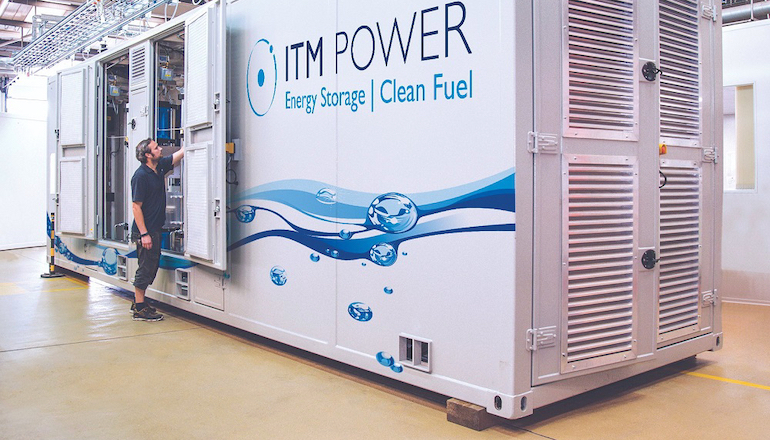
The consortium behind the Gigastack renewable hydrogen project in the Humber region of the UK is aiming to reach a final investment decision in the next 18-months and work towards a commercial operating date in 2025.
ITM Power, Orsted, Phillips 66 and Element Energy have published a report highlighting the progress made to date and describing the pathway to FID for the first 100MW facility.
The consortium will seek to work with the UK government over the next 12 months to secure revenue support, agree specific deployment targets for renewable hydrogen and ensure the Gigastack deployment target of 2025 is achieved.
Phase two of the project has taken feasibility stage concepts through Front End Engineering Design for the 100MW electrolyser system, using renewable power from the Hornsea 2 offshore wind farm to provide green hydrogen to the Phillips 66 Humber refinery to replace hydrocarbon-based fuels within industrial-scale fired heaters.
ITM Power has progressed its next generation of electrolyser technology and moved into a new Gigafactory in Bessemer Park, Sheffield.
Orsted and Phillips 66 have developed the technical design for an industry-scale renewable hydrogen facility near Immingham, explored the current policy and regulatory landscape, and identified barriers to developing large-scale renewable hydrogen production facilities.
They have also come up with potential solutions to deal with the barriers and built a business case to map a pathway to an investable proposition.
The study suggests an opportunity to significantly reduce the levelized cost of hydrogen by around 47% by 2030.
Gigastack has already helped create more than 100 jobs at ITM Power’s Gigafactory and the initial 100MW is projected to create an additional 180 jobs, while an expansion to 1GW by 2030 could contribute up to £2.5bn gross value added and 1700 permanent jobs to Immingham’s local economy.
Orsted head of UK Duncan Clark said: “The findings from the Gigastack project provide an important step for renewable hydrogen in the UK and highlight the decarbonisation opportunities achievable with the right support framework in place.
“Offshore wind provides enormous potential with the installed capacity we already have in the UK and with huge amounts more to come.
“There is a genuine opportunity to support the pathway to net-zero for energy-intensive industry through truly green hydrogen and for the UK to be at the global forefront of renewable hydrogen development and deployment.”
Phillips 66 Gigastack project manager Philip Gothard said: “The launch of the Gigastack public report represents an important milestone for renewable hydrogen in the UK and demonstrates its key role within industrial decarbonisation.
“The work is testament to the close collaboration between consortium members and we are proud to have contributed with our skills and experience of operating large scale hydrogen production units for over 50 years.
“The Phillips 66 Humber Refinery is a UK leader in the production of lower carbon fuels and the only European producer of graphite coke for electric vehicle batteries.
“Gigastack is an exciting part of the Refinery’s decarbonisation journey and we look forward to progressing the project through to deployment.”
ITM Power chief executive Graham Cooley said: “Gigastack is exactly the kind of project that will help to make the UK a world leader in technologies that can help the whole world address climate change issues.
“Backing green hydrogen now will deliver investment, skilled jobs and leadership in an energy transition sector that is set to grow exponentially over the coming decade. We need to be ready for that growth.”
Element Energy partner Ben Madden said: “The consortium has demonstrated to the UK government and the wider hydrogen sector the benefits of renewable hydrogen alongside a pathway to commercialisation and deployment of a GW-scale electrolyser facility by the end of 2025, subject to government support.
” The Gigastack project has the potential to catalyse the large-scale production and supply of renewable hydrogen in the UK, an important step in our wider decarbonisation journey to net zero.”