

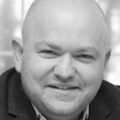
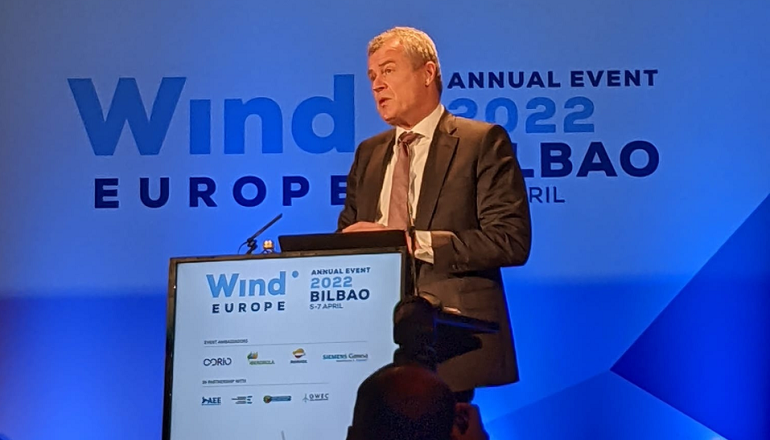
Siemens Gamesa chief executive Jochen Eickholt is to step down, as the troubled turbine manufacturer outlined further restructuring steps.
Eickholt informed the board he is giving up the post on 31 July and will be replaced by Vinod Philip, who has served as head of global functions.
Philip will take over on 1 August with Eickholt leaving the company by “mutual agreement” on 30 September, Siemens Energy said.
Philip will lead the wind power division during its integration into the Siemens Energy Group’s management structure, according to the parent company.
“I would like to thank Jochen Eickholt personally and on behalf of Siemens Energy for his commitment in turbulent times,” said Siemens Energy CEO Christian Bruch.
“In his former role as a member of the Managing Board of Siemens Energy, Jochen made a major contribution to the very successful development of the Gas Services and Transformation of Industry Divisions. In a very difficult situation at Siemens Gamesa, Jochen laid the central foundations for the urgently needed reorganization and new start within Siemens Energy.
“It is only fair to emphasize that the causes of the quality problems did not fall under his tenure as CEO.”
He added: “Vinod Philip is an excellent and highly esteemed manager. He has the best of both worlds: As Head of Service of Large Power Generation he has gained operational experience and as Chief Technology Officer and responsible Member of the Executive Board of the Global Functions Division he has successfully managed central functions critical to success,” says Siemens Energy CEO Christian Bruch.”
Siemens Gamesa has meanwhile initiated comprehensive restructuring measures and steps for long-term strategic development with the aim of achieving a double-digit operating margin.
The aim of the measures is to achieve break-even by 2026 and then returning to profitable growth. The company will remain active in both the onshore and offshore business.
In future, the onshore business will focus primarily on markets that offer a stable regulatory framework and in which Siemens Gamesa can optimally and profitably meet the needs of its customers with its product ranges, it said. Specifically, these are the European domestic market and the USA.
The production capacities in the onshore area will be adapted to this new orientation. The most important task in the offshore area is the ramp-up of capacities, which is currently running as planned at the sites in Cuxhaven (Germany), Aalborg (Denmark) and Le Havre (France).
A new organisational model will meanwhile also reduce hierarchical levels and regulate responsibilities more clearly, the company said.
These measures were also successfully implemented in the other Siemens Energy businesses in 2022.
However, the organisational realignment will also result in job adjustments. On balance, however, the number of employees at Siemens Gamesa is expected to remain roughly constant over the next few years, as areas such as offshore are growing.
“The aim is to absorb as much of the planned staff reduction in the affected areas as possible through internal job transfers. The exact impact of the job cuts, especially on individual countries and locations, cannot yet be quantified.”