


The world has a viable pathway to building a global energy sector with net zero emissions in 2050, but requires annual additions of solar to reach 630GW by 2030 and those for wind to reach 390GW.
Together, this is four times the record level set in 2020, according to the International Energy Agency (IEA) published report, Net Zero by 2050: a Roadmap for the Global Energy Sector.
The world has a viable pathway to building a global energy sector with net zero emissions in 2050, but it is narrow and requires an “unprecedented transformation of how energy is produced, transported and used globally”, the IEA stated.
By 2050, the roadmap envisions that almost 90% of electricity generation comes from renewable sources, with wind and solar PV together accounting for almost 70%.
Most of the remainder comes from nuclear power and solar is the world’s single largest source of total energy supply.
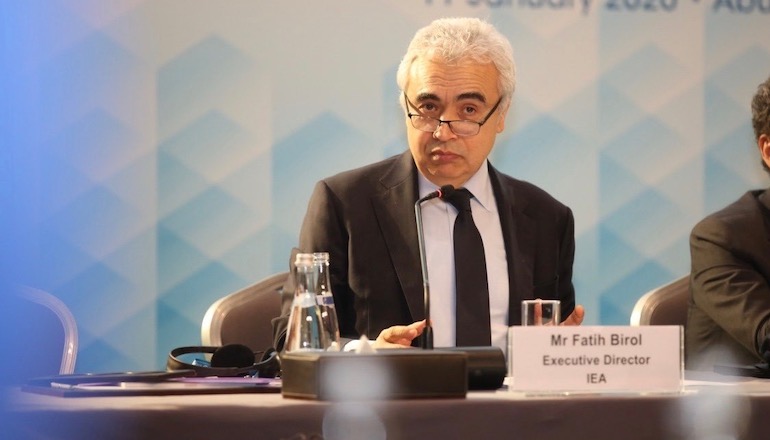
“The scale and speed of the efforts demanded by this critical and formidable goal – our best chance of tackling climate change and limiting global warming to 1.5 °C – make this perhaps the greatest challenge humankind has ever faced,” said Fatih Birol, IEA executive director.
The IEA said the report is the world’s first comprehensive study of how to transition to a net zero energy system by 2050 while ensuring stable and affordable energy supplies, providing universal energy access, and enabling robust economic growth.
The report found that most of the global reductions in CO2 emissions between now and 2030 in the net zero pathway come from technologies readily available today.
In 2050, almost half the reductions come from technologies that are today at the demonstration or prototype phase.
This demands that governments “quickly increase and reprioritise their spending on research and development – as well as on demonstrating and deploying clean energy technologies – putting them at the core of energy and climate policy”.
Progress in the areas of advanced batteries, electrolysers for hydrogen, and direct air capture and storage can be particularly impactful, the roadmap highlighted.
A transition of such scale and speed cannot be achieved without sustained support and participation from citizens, whose lives will be affected in multiple ways, said the IEA.
Providing electricity to around 785 million people who have no access to it and clean cooking solutions to 2.6 billion people who lack them is an integral part of the roadmap’s net zero pathway.
This costs around $40bn a year, equal to around 1% of average annual energy sector investment.
It also brings major health benefits through reductions in indoor air pollution, cutting the number of premature deaths by 2.5 million a year.
Total annual energy investment will rise to $5tn by 2030 in the net zero pathway, adding an extra 0.4% a year to global GDP growth, based on a joint analysis with the International Monetary Fund.
The jump in private and government spending creates millions of jobs in clean energy, including energy efficiency, as well as in the engineering, manufacturing and construction industries.
All of this puts global GDP 4% higher in 2030 than it would reach based on current trends, the IEA stated.
Fossil fuels fall from almost four-fifths of total energy supply today to slightly over one-fifth and fossil fuels that remain are used in goods where the carbon is embodied in the product such as plastics, in facilities fitted with carbon capture, and in sectors where low-emissions technology options are scarce.