


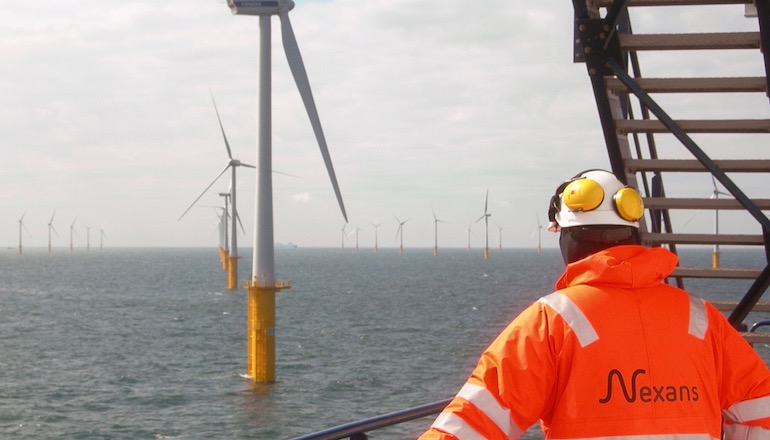
A US consumer survey by cable maker Nexans found that Americans expressed “overwhelmingly favourable” views of wind and solar renewable energy proposals.
The survey into US consumers’ attitudes towards climate change found 90% were in support of solar photovoltaic farms (10% opposed), 85% of those surveyed were in favour of onshore wind (15% against), while 83% were in favour of offshore wind (17% against).
In the survey more than 70% of participants stated they would be willing to give or donate a percentage of their personal income to support the fight against climate change.
The results showed 28% were willing to provide less than 1% of their income, 33% said they would be willing to contribute 1-5% of their income, while 6% said they would give between 6-10% of their income and 3% indicated they would contribute more than 10% of their income.
Just under a third of those surveyed indicated they were unwilling to give or donate any percentage of their income to support the fight against climate change.
The US findings are part of a series of surveys commissioned by Nexans in the US, the UK and France, in order to determine public opinion on climate change and related issues in the wake of the COVID-19 pandemic.
The US study was conducted online by Researchscape from 20 to 24 August 2020.
Participants were given the opportunity to choose from seven multiple responses to the question “How should the fight against climate change be paid for?”
The majority (59%) replied it should be paid for by “government incentives for both businesses and consumers.”
It was followed by “federal, state and/or local taxes” and “conservation programmes” (tied at 47%); “business investments” (42%) and “consumer-driven purchases” (33%).
Just 9% selected none of the above and 2% selected other.
In similar research conducted by Nexans in the UK nearly two thirds (65.8%) of UK respondents said they would be willing to donate part of their salary to fight climate change.
Nearly a third (29%) of consumers in the UK survey said they believed that combating climate change has become “more of a priority” in light of the coronavirus pandemic.