


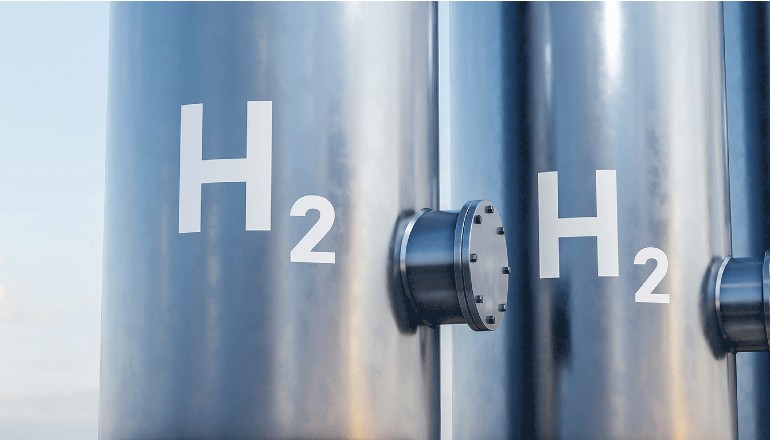
The UK government has confirmed that 10 commercial-scale green hydrogen projects have signed long-term contracts under its Hydrogen Allocation Round 1 (HAR1) process, enabling construction to begin and unlocking more than 700 jobs across the country.
The announcement marks the first wave of shovel-ready hydrogen projects to reach this stage, supporting the government’s Plan for Change and its mission to become a clean energy superpower.
The projects will supply clean hydrogen to British businesses across a range of industries including waste disposal, steel, brewing, transport, and tissue manufacturing.
Construction is already underway at the HyMarnham project in Newark, Nottinghamshire, which is transforming the former High Marnham coal-fired power station into a clean energy hub.
Other schemes include the Cromarty Hydrogen Project in northeast Scotland, where three 5MW electrolysers will supply hydrogen to local industry, including distilleries.
Collectively, the projects are expected to attract over £400m in private capital between 2024 and 2026 and will generate roles for pipefitters, engineers, graduates and apprentices across industrial centres such as South Wales, North Scotland, Teesside, and Bradford.
UK Minister for Industry Sarah Jones said: “Hydrogen will help us cut industrial emissions and support Britain’s industrial renewal by creating thousands of jobs in our industrial heartlands as part of the Plan for Change.”
Kimberly-Clark has also announced it will be the first major UK consumer goods manufacturer to adopt green hydrogen at scale, committing £125m with partners HYRO, Carlton Power, and Schroders Greencoat to HAR1 projects in Cumbria and Kent.
Neil McDermott, chief executive of Low Carbon Contracts Company, said the agreements “provide revenue stability for producers, and a clear signal that low-carbon hydrogen has a key role to play in the UK’s future energy system”.
The government has also announced plans to consult on hydrogen transmission-level blending to explore its impact on energy costs and the potential for wider system integration.